
San Diego · 59+ years
Ember-Resistant Vents
Insurer flag your home for fire risk? We install ember-resistant vents that meet California's wildfire standards.
- Licensed & insured — CSLB #247618
- Family-owned in San Diego since 1967
- Free, no-obligation estimates
- Emergency service answered 24/7
Request your free estimate
Tell us about your project — a real person will get right back to you.
Your attic vents are one of the most common ways a wildfire gets into a home. Wind-driven embers travel a mile or more ahead of a fire, and an ordinary attic, eave, or gable vent draws them straight into the structure, where they ignite insulation and framing from the inside. Ember-resistant vents are designed to stop exactly that — and in San Diego County they've become both a fire-safety upgrade and, increasingly, an insurance requirement.
We've been roofing San Diego since 1967, and we install fire- and ember-resistant vents — including Brandguard, Vulcan, and O'Hagin — as a standalone retrofit, as part of a roof replacement, or as one piece of a broader home-hardening plan. If your insurer has flagged your home for fire risk, or you live in one of the county's Fire Hazard Severity Zones, this is one of the highest-impact upgrades you can make.
What makes a vent "ember-resistant"
A standard vent is just a screened opening. An ember-resistant vent — sometimes searched for as an ember-proof or fire-proof vent — is engineered and lab-tested to keep flames and burning embers out of the attic while still letting the roof breathe. California's building code recognizes two ways to get there:
- Listed ember- and flame-resistant vents tested to ASTM E2886, the standard that subjects a vent to a stream of embers and direct flame to confirm nothing gets through. Brandguard, Vulcan, and O'Hagin all make vents built to this standard.
- Fine non-combustible mesh — corrosion-resistant metal screening with openings between 1/16" and 1/8" — where listed vents aren't used.
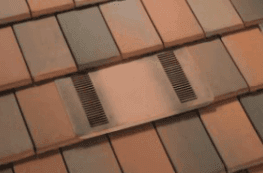
These products do their job in different ways. Brandguard uses a baffled internal path that lets air out but blocks embers. Vulcan vents carry an intumescent coating that swells shut when it senses fire heat, sealing the opening completely. O'Hagin makes low-profile tile and shingle vents in ember-resistant versions that sit nearly flush with the roof. We'll recommend the right one for your roof type and where the vent sits.
Why this matters more in San Diego
Large stretches of San Diego County sit in the Wildland-Urban Interface (WUI) — communities like Scripps Ranch, Rancho Bernardo, Poway, Alpine, Ramona, Julian, Jamul, Valley Center, and Fallbrook, where homes meet open, fire-prone terrain. After the Cedar and Witch fires, the lesson investigators kept repeating was the same: a huge share of homes are lost not to the flame front, but to embers finding a way in — and vents are the most common entry point.
If your home is in a designated Fire Hazard Severity Zone, the California Building Code's wildfire provisions (Chapter 7A) apply to new roofs and many retrofits, and vents are specifically covered.
The insurance angle — staying insurable
This is what's driving most of the calls we get. California insurers are non-renewing homes in higher-risk areas, and many are requiring fire-hardening measures before they'll write or renew a policy — pushing homeowners who can't comply onto the more expensive California FAIR Plan.
At the same time, California's "Safer from Wildfires" regulation requires insurers to recognize and discount for specific mitigation measures — and ember-resistant vents and a Class-A fire-rated roof are both on that list. Upgrading your vents is one of the concrete, documentable steps that can help you qualify for coverage and earn a mitigation discount.
A note of honesty: we can't promise any particular carrier will reinstate your policy or grant a specific discount — that's the insurer's decision. What we can do is bring your home up to the standards insurers reward, and document the work so you have proof to give your agent. For the full picture, see our guide to roofing and vents for home insurance.
What we install
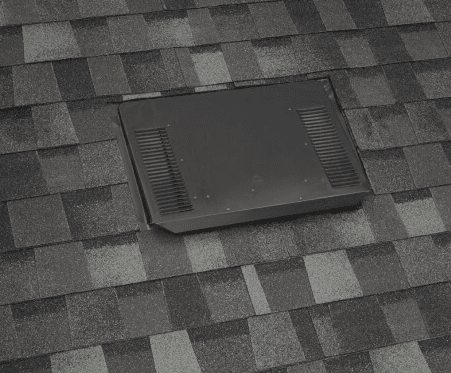
- Attic and roof vents — ember-resistant low-profile, box, and dormer vents (Brandguard, Vulcan, O'Hagin).
- Eave and soffit intake vents — the low intake vents that feed the attic, replaced with ember-resistant equivalents.
- Gable vents — the large wall vents that are a major ember entry point, swapped for fire-rated units.
- Retrofits and full reroofs — we can replace vents on their own (attic vent replacement and gable vent replacement as an ember-resistant retrofit), or fold the upgrade into a roof replacement so the whole assembly is wildfire-ready. We always balance intake and exhaust correctly so the new vents protect the roof without starving it of airflow (see roof venting options).
Why Resilient Roofing
We're a family-owned San Diego roofer, fully licensed and insured (CSLB #247618), and we've worked on the county's hillside and canyon homes for over half a century. We'll inspect your existing vents, tell you honestly which ones actually need upgrading, and give you a clear, itemized quote — no scare tactics, no upselling vents you don't need.
To get started, request a free assessment above or call (619) 501-2138. We'll take a look at your roof and walk you through your options.
Frequently Asked Questions
What are ember-resistant vents?
They're attic, eave, and gable vents engineered and lab-tested to keep wind-driven embers and flames out of your attic while still letting the roof breathe. The listed products we install — Brandguard, Vulcan, and O'Hagin — are tested to the ASTM E2886 ember- and flame-intrusion standard that California's wildfire code relies on. Ordinary vents are just screened openings and offer little protection.
Are ember-resistant vents required in San Diego?
If your home is in a designated Fire Hazard Severity Zone, the California Building Code's wildfire provisions (Chapter 7A) apply to new roofs and many retrofits, and vents are specifically covered. Much of San Diego County — including Scripps Ranch, Rancho Bernardo, Poway, Alpine, Ramona, Julian, Jamul, Valley Center, and Fallbrook — falls into these zones. We can tell you whether your address is affected.
Will ember-resistant vents help me keep my homeowners insurance?
They can help. California's "Safer from Wildfires" rules require insurers to recognize ember-resistant vents (and a Class-A roof) as qualifying mitigation, so upgrading is one of the documentable steps that supports staying insurable or earning a mitigation discount. We can't promise a specific carrier will reinstate a policy or grant a particular discount — that's the insurer's call — but we'll document the work so you have proof for your agent. See our home insurance guide.
Can you just replace my vents, or do I need a whole new roof?
Vents can absolutely be replaced on their own as a retrofit — you don't need a full reroof. That said, if your roof is already aging, it often makes sense to combine the vent upgrade with a roof replacement and a Class-A assembly so the whole roof is wildfire-ready at once. We'll give you an honest recommendation either way.
Which vent brand do you recommend — Brandguard, Vulcan, or O'Hagin?
It depends on your roof type and where each vent sits. Brandguard uses a baffled internal path, Vulcan uses an intumescent coating that swells shut under fire heat, and O'Hagin makes low-profile tile and shingle vents in ember-resistant versions. We install all three and will walk you through the trade-offs rather than push one brand.
Do you offer free estimates on vent upgrades?
Yes. We'll inspect your existing vents, tell you which ones genuinely need upgrading, and give you a free, itemized quote. Request yours here or call (619) 501-2138.
Ready for a roof you can count on?
Call (619) 501-2138 or request your free, no-pressure consultation.