
Brandguard Vents in San Diego
Brandguard vents are among the most established flame- and ember-resistant vents on the market, and they're a popular choice for hardening San Diego homes against wildfire. Resilient Roofing installs Brandguard vents across the county — as a standalone retrofit or as part of a roof replacement.
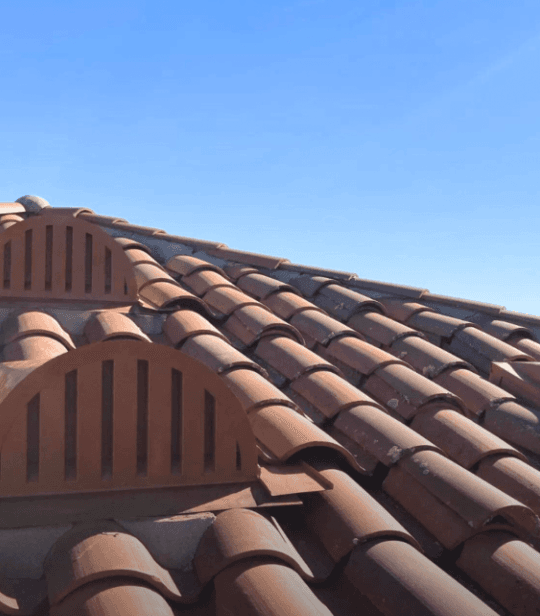
How Brandguard vents work
A wildfire rarely reaches a home as a wall of flame. It arrives first as a storm of wind-driven embers, and an ordinary attic or eave vent draws those embers straight inside, where they smolder into insulation and framing. Brandguard vents are built to stop that.
Instead of a simple screened opening, a Brandguard vent uses a baffled internal pathway: air can still flow in and out to ventilate the attic, but embers and flames can't follow a straight line through the vent. The design is tested to ASTM E2886 — the standard that blasts a vent with a stream of embers and direct flame to verify nothing penetrates. That testing is what lets these vents satisfy California's Wildland-Urban Interface (WUI) code.
Where Brandguard vents fit on your home
Embers find every opening, so the upgrade usually covers more than the roof:
- Attic and roof vents — the box and low-profile vents high on the roof.
- Eave and soffit vents — the intake vents under the eaves, a classic ember trap.
- Gable vents — the large vents in the gable wall, one of the biggest single openings on a house.
We'll inspect what you have, identify the vulnerable openings, and replace them with appropriately sized Brandguard units — while keeping intake and exhaust balanced so your attic still breathes properly (see roof venting options).

Why this matters in San Diego County
Much of San Diego County — Scripps Ranch, Rancho Bernardo, Poway, Alpine, Ramona, Julian, Jamul, Valley Center, Fallbrook and beyond — sits in a Fire Hazard Severity Zone where the California Building Code's wildfire provisions (Chapter 7A) apply. If you're reroofing or retrofitting in one of these areas, your vents need to meet the ember-resistant standard, and Brandguard is one way to get there.
There's an insurance dimension too. California carriers are non-renewing homes that don't meet fire-hardening standards, while the state's "Safer from Wildfires" rules require insurers to recognize ember-resistant vents and Class-A roofs as qualifying mitigation. Upgrading is one of the documentable steps that can help keep your home insurable — see our full guide to roofing and vents for home insurance.
Brandguard, Vulcan, or O'Hagin?
Brandguard isn't the only quality option, and we install several. Vulcan vents take a different approach — an intumescent coating that swells shut under fire heat — and O'Hagin makes low-profile tile and shingle vents in ember-resistant versions. The best choice depends on your roof type and where each vent sits. We'll walk you through the trade-offs rather than push a single brand. For the bigger picture, see our ember-resistant vents overview and our home hardening guide.
Get Brandguard vents installed
We're a family-owned San Diego roofer, licensed and insured (CSLB #247618), serving the county since 1967. To get a free assessment of your vents and a clear, itemized quote, get in touch or call (619) 501-2138.
Frequently Asked Questions
What are Brandguard vents?
Brandguard vents are flame- and ember-resistant attic, eave, and gable vents. Instead of a simple screened opening, they use a baffled internal pathway that lets air flow but blocks embers and flames from passing straight through. They're tested to the ASTM E2886 standard, which is what allows them to meet California's Wildland-Urban Interface (WUI) fire code.
Do you install Brandguard vents in San Diego?
Yes. Resilient Roofing installs Brandguard vents across San Diego County — as a standalone retrofit or as part of a roof replacement. We'll inspect your home, identify the vulnerable openings, and replace them with correctly sized units while keeping your attic ventilation balanced.
Are Brandguard vents Chapter 7A / WUI compliant?
Brandguard vents are tested to ASTM E2886, the ember- and flame-intrusion standard that California's Chapter 7A wildfire provisions rely on, which is why they're widely used to meet WUI requirements in Fire Hazard Severity Zones. We'll confirm the right product for your specific roof and code situation.
How do Brandguard vents compare to Vulcan vents?
Both are excellent, tested to the same ASTM E2886 standard — they just work differently. Brandguard uses a baffled internal path to block embers, while Vulcan vents use an intumescent coating that swells shut when it senses fire heat. The best choice depends on your roof type and where the vent sits, and we install both.
Will Brandguard vents help with my insurance?
They can. Ember-resistant vents are a recognized mitigation measure under California's "Safer from Wildfires" rules, so installing them is one of the documentable steps that supports staying insurable or earning a discount. See our roofing and home insurance guide for the full picture.
Ready for a roof you can count on?
Call (619) 501-2138 or request your free, no-pressure consultation.