
Roof Ventilation in San Diego
The single most important thing to understand about roof ventilation is that it has to be balanced: cool air drawn in low at the eaves, hot air pushed out high near the ridge. Intake and exhaust have to work together — get that pairing right and your attic breathes, your roof runs cooler, and your shingles and decking last longer. Add exhaust vents without enough intake (or the other way around) and you've spent money without actually moving much air.
In San Diego that balance does double duty. Our intense sun bakes the attic and the roof above it, driving up cooling bills, while our marine-layer humidity can leave moisture on the underside of the deck. Good ventilation tackles both at once. Below is how it works, the vent types we use, and the warning signs that your attic isn't breathing the way it should.
Why ventilation matters more in San Diego
In our decades roofing San Diego, we've torn off enough roofs to see exactly what poor airflow does over time — and our climate makes the stakes higher than most people expect.
- The sun bakes your attic. San Diego's relentless UV and heat — especially inland in El Cajon, Santee, and Escondido — can turn an under-ventilated attic into an oven. That trapped heat radiates down into your living space, so your air conditioner runs harder and your bills climb. It also cooks the roof from below, aging asphalt shingles faster than the weather alone would.
- The marine layer brings moisture. Closer to the coast — La Jolla, Pacific Beach, Encinitas, Coronado — and on cool, damp mornings inland, the marine layer's humidity finds its way into the attic. When warm, moist air meets the cooler underside of the roof deck, it condenses. Over time that moisture rots plywood and skip sheeting and feeds mold and mildew. It's one of the most common forms of hidden damage we find when we pull an old roof off.
Heat on top and moisture underneath: ventilation is what keeps both from quietly shortening the life of your roof.
How balanced ventilation actually works
A roof vents the way a chimney draws. As the attic heats up, hot air rises and escapes through exhaust vents high on the roof. That escaping air creates a slight vacuum that pulls fresh, cooler air in through intake vents low at the eaves. The cool air sweeps up the underside of the deck and out the top, carrying heat and moisture with it.
The catch is that the system only works if both halves are sized to match.
- Intake is the half most people forget. It lives low — in the soffits or eaves — and feeds the whole system. Without enough intake, your exhaust vents starve and the attic stagnates.
- Exhaust sits high, near the ridge or the upper roof, and lets the hot, moist air out.
Roughly speaking, you want intake and exhaust reasonably balanced so air can flow continuously from bottom to top. We size both halves to the attic's square footage and to local code requirements (the code calls for a minimum amount of net free vent area based on attic size) — that calculation is part of every reroof we do.
Common roof vent types
There's no single "best" vent — the right choice depends on your roof, your material, and how your attic is built. These are the ones we work with most in San Diego.
Exhaust (high on the roof):
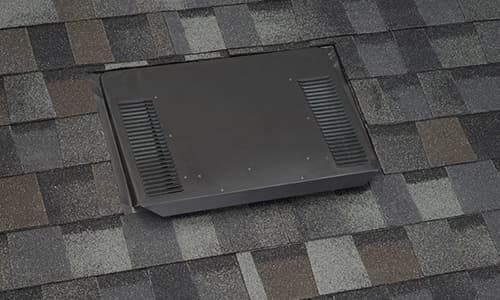
- Low-profile / box vents. Flat, unobtrusive vents set near the top of the roof. This is our standard, and for many roofers it's considered an upgrade — we prefer the clean look and how well they flow. We install enough of them to hit the required vent area for your attic.
- Ridge vents. Continuous vents that run along the peak, hidden under a cap of shingle or tile, exhausting heat along the entire ridge. They're a clean, effective option, and certain premium ridge-vent products are made specifically for asphalt shingle roofs.
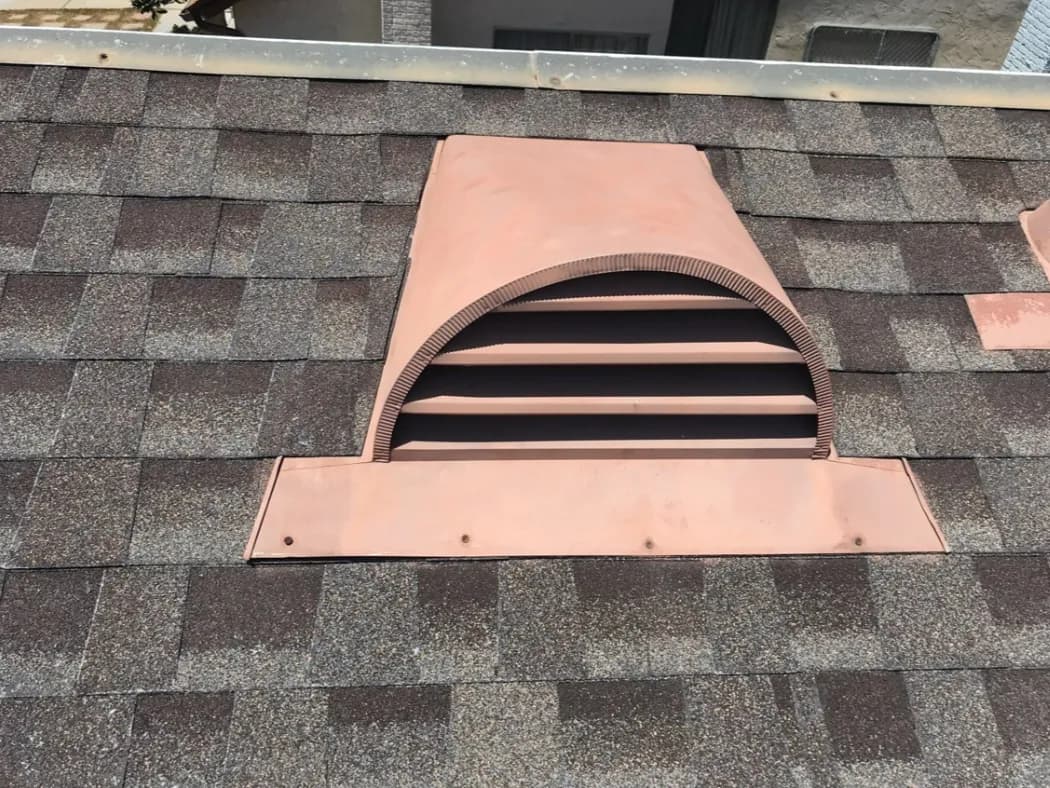
- Dormer / louver vents. Raised vents — sometimes in copper or another metal — that double as an architectural accent while exhausting attic air. A nice fit on homes where the vent will be visible from the street.
- Turbines. The spinning "whirlybird" vents that use wind to pull air out. They move air when the breeze cooperates, but they have moving parts that can wear, and many homeowners don't love the look.
Intake (low at the eaves):
- Soffit / eave vents. The workhorses of intake — vents in the underside of the eaves that feed fresh air into the attic. No exhaust system performs without adequate soffit intake behind it.
Powered vs. passive: Passive vents (everything above) use natural airflow and have nothing to break, fail, or run up an electric bill — which is why they're our default. Powered fans move air actively but add a motor that can fail and, if intake is undersized, can even pull conditioned air out of the house. For most San Diego homes, a well-balanced passive system does the job without the complications.
Fire-prone areas: If you're in one of San Diego County's wildfire zones, your vents do double duty — they also need to keep embers out. We can fit any of these vent types in ember-resistant versions (Brandguard, Vulcan, O'Hagin) that meet California's WUI fire code.
Signs your attic isn't breathing
You usually feel a ventilation problem before you see it. Watch for:
- Hot upstairs rooms that never quite cool down, especially in the afternoon.
- Cooling bills that climb as the attic heat works against your air conditioner.
- Shingles aging early — curling, blistering, or wearing out well before their rated life because they've been cooked from below.
- Moisture, musty smells, or visible mold in the attic, or rusty nail tips poking through the deck — all signs that humid air is condensing where it shouldn't.
If any of these sound familiar, the fix is sometimes as simple as adding intake or exhaust to restore the balance — often part of a roof repair rather than a full job.
How poor ventilation shortens roof life — and your warranty
Heat and trapped moisture are hard on every part of a roof. Excess attic heat bakes asphalt shingles from the underside and speeds their breakdown, while condensation works on the decking and the underlayment — the waterproofing layer that actually keeps water out of your home. A roof that can't breathe simply doesn't last as long as one that can.
There's a warranty angle too. Many shingle manufacturers require adequate, balanced ventilation as a condition of their material warranty. If an attic is poorly vented and the shingles fail early, that can put a warranty claim at risk. Building ventilation in correctly from the start protects both the roof and the coverage behind it — which is exactly why we calculate it on every roof replacement.
The energy and Title 24 angle
Ventilation is part of how a roof manages heat, and California's Title 24 building-energy standards put real weight on that — San Diego County sits in Climate Zone 7, where cool-roof requirements apply. Reflective roofing materials, proper insulation, and balanced ventilation all work together to keep attic temperatures down and cooling costs in check. We handle the code details so your roof stays compliant and comfortable. (For how all of this factors into a project, see our roofing cost guide.)
How Resilient approaches ventilation
We've been roofing San Diego since 1967, and we treat ventilation as part of the roof, not an afterthought. On every job we calculate the intake and exhaust your attic actually needs, install vents that meet code and look right on your home, and tell you honestly if your current setup is the reason your upstairs runs hot or your old shingles wore out early. No upsell — just the right amount of airflow for your roof.
The first step is always a free, no-pressure look at your actual roof and attic. When you're ready, get in touch and we'll come take a look.
Frequently Asked Questions
What is balanced roof ventilation?
Balanced ventilation means your roof has roughly matched intake and exhaust working together: cool air drawn in low at the eaves (through soffit/eave vents) and hot, moist air pushed out high near the ridge (through ridge, low-profile, or other exhaust vents). Both halves have to be sized to your attic. Exhaust without enough intake — or intake without enough exhaust — won't move much air, so spending on one half alone usually doesn't fix the problem.
Why does roof ventilation matter so much in San Diego specifically?
Our climate hits a roof from two directions. Intense UV and heat — especially inland in areas like El Cajon, Santee, and Escondido — bake the attic, drive up cooling bills, and age shingles from below. At the same time, the marine layer's humidity along the coast and on cool mornings can condense on the underside of the roof deck, leading to rot and mold. Balanced ventilation addresses the heat and the moisture at the same time.
What are the signs my attic isn't venting properly?
The most common signs are upstairs rooms that stay hot in the afternoon, climbing cooling bills, shingles that curl, blister, or wear out early (cooked from below), and moisture issues in the attic — musty smells, visible mold or mildew, or rusty nail tips poking through the deck. If you notice these, a ventilation check is worth it; the fix is sometimes as simple as adding intake or exhaust to restore balance.
Are powered (electric) roof fans better than passive vents?
For most San Diego homes, a well-balanced passive system does the job without the downsides. Passive vents (low-profile, ridge, soffit, etc.) use natural airflow and have nothing to break or run up an electric bill. Powered fans move air actively but add a motor that can fail, and if intake is undersized they can even pull conditioned air out of your house. We default to passive and size it correctly rather than relying on a fan.
Can poor ventilation void my roof warranty?
It can affect it. Many shingle manufacturers require adequate, balanced ventilation as a condition of their material warranty. If an attic is poorly vented and the shingles fail early, that can put a warranty claim at risk. Building ventilation in correctly from the start protects both the roof's lifespan and the coverage behind it, which is why we calculate intake and exhaust on every roof we install.
How does roof ventilation relate to Title 24 and energy costs?
Ventilation is part of how a roof manages heat, and California's Title 24 energy standards put real weight on that — San Diego County sits in Climate Zone 7, where cool-roof requirements apply. Reflective roofing materials, proper insulation, and balanced ventilation work together to keep attic temperatures and cooling costs down. We handle the code details so your roof stays compliant and comfortable.
Ready for a roof you can count on?
Call (619) 501-2138 or request your free, no-pressure consultation.