
El Niño Roof Prep for San Diego: The 2026–27 Wet Season Guide
San Diego is heading into its wet season with the strongest El Niño forecast in the modern record. NOAA now gives this event a greater than 90% chance of being "very strong" and a 75% chance of becoming the strongest El Niño since reliable records began in 1950 — and on September 21, 2026, Governor Newsom proclaimed a state of emergency to prepare California for it. For homeowners, the practical takeaway is simple: get your roof inspected and your drainage cleared before the storms arrive, while repairs are still easy to schedule. This guide covers what the forecast actually says, what the state of emergency means, what past El Niño winters have done to San Diego roofs, and a step-by-step preparation checklist.

Where the forecast stands (September 2026)
The authoritative source for El Niño forecasts is NOAA's Climate Prediction Center, which issues an ENSO Diagnostic Discussion on the second Thursday of every month. As of the September 10, 2026 update:
- An official El Niño Advisory is in effect, and the event is still strengthening.
- Sea-surface temperatures in the key Niño-3.4 monitoring region have reached +1.8°C above normal — up from +1.4°C in August and +1.2°C in July.
- NOAA puts the odds of a very strong event this fall and winter at greater than 90%.
- The odds of a historic event — one exceeding +2.5°C, stronger than anything since 1950 — have risen to 75%, up from 69% in August.
- The event is expected to remain firmly established through winter 2026–27 and persist into spring 2027.
One honest caveat we repeat all season: El Niño shifts the odds toward a wet Southern California winter — it doesn't guarantee one. NOAA's own discussion notes that impacts are more likely but not certain. Our post on odds versus guarantees explains why you should prepare anyway: you don't need certainty to act on odds this high.
California's state of emergency: what it actually means
On September 21, 2026, Governor Newsom proclaimed a state of emergency to bolster statewide El Niño preparedness ahead of the 2026–27 wet season. It is a preparedness declaration — the state acting early rather than reacting after the first flood. Under the proclamation, California is:
- Staging flood-fighting supplies — sandbags, pumps, plastic sheeting, and riprap — around the state before the storms arrive
- Mobilizing the California National Guard for flood response, search-and-rescue, engineering, and logistics
- Fast-tracking environmental permitting for flood-protection work
- Expanding multilingual public-preparedness communications
State water officials have flagged Southern California specifically for heightened storm activity, including large waves in November and December that could drive coastal erosion and coastal flooding when storms line up with high tides. San Diego Mayor Todd Gloria said the city is working closely with state and regional partners and urged residents to "take steps now to prepare their homes and families for severe weather."
The message from every level of government is the same one we've been giving since NOAA's first advisory in July: prepare during the dry weeks, not during the first storm.
What El Niño winters have done to San Diego before
San Diego averages roughly 10 inches of rain a year. Strong El Niño winters have rewritten that number:
- 1997–98: 20.89 inches — over 200% of normal, the benchmark wet winter longtime roofers still talk about
- 1982–83: 18.49 inches — nearly 180% of normal
- 2023–24: about 14 inches, including the January 22, 2024 storm that flooded whole neighborhoods
- 2015–16: about 11 inches — the famous "Godzilla" El Niño that under-delivered, and the reason we talk in odds, not promises
NOAA is now saying the current event has better-than-two-in-three odds of being stronger than 1997–98 or 1982–83. Our deep dive into how much rain El Niño winters really bring has the full history.
Why wet winters are hard on San Diego roofs specifically
It isn't just the total inches — it's the pattern. El Niño rain tends to arrive as storm after storm, with roofs that never fully dry out between systems. A flaw that shrugs off one quick shower fails under the fourth soaking in two weeks. San Diego's housing stock has particular weak points:
- Aging underlayment under healthy-looking tile. Much of the county's 1960s–80s housing wears concrete or clay tile that lasts 50+ years — over felt underlayment that fails in 20–30. The tile looks fine from the street while the actual waterproof layer underneath is brittle and cracked. A tile relay (lift the tile, replace the underlayment, re-lay the same tile) fixes this without buying a whole new roof.
- Flashing and penetrations. Chimneys, skylights, vents, and roof-to-wall transitions are where most rainy-season leaks actually start — see flashing failures.
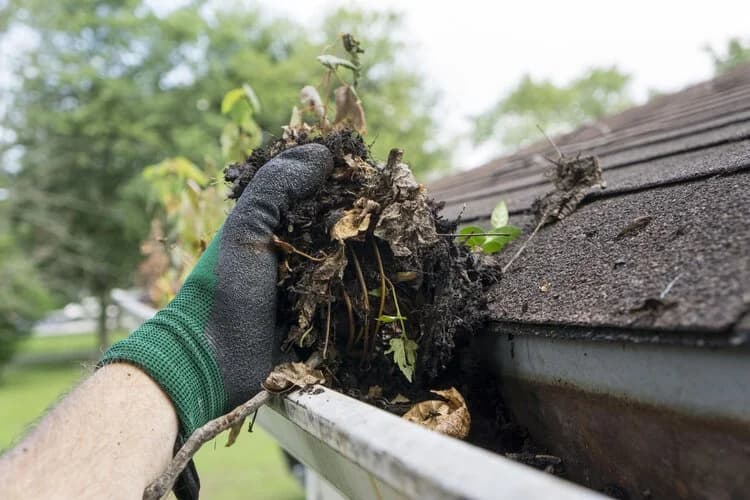
- Clogged gutters and downspouts. A gutter full of jacaranda leaves and shingle granules turns into a dam that pushes water under the roof edge and dumps it against your foundation.
- Flat and low-slope sections. Ponding water on a flat roof finds every seam. If your flat roof already ponds after a light rain, a historic winter will not be kind to it.

By the time a stain shows on the ceiling, water has usually been in the roof structure for a while. The whole point of preparing early is to never see that stain.
Your El Niño roof-prep checklist
Here's how we'd sequence it between now and the first significant storms, which in strong El Niño years often hold off until December–January — a window you should use, not count on:
- Get a professional roof inspection now. A trained eye on the roof (we inspect with drones where it's safer) catches cracked flashing, slipped tiles, worn sealant, and brittle underlayment before water finds them. Ours are free — request one here.
- Make the small repairs immediately. The fixes that are cheap and quick in October — resealing a pipe jack, replacing a run of flashing, repairing a valley — become emergency calls in January. Our roof repair team handles these year-round.
- Clean gutters and downspouts, then check them again in November. Water needs somewhere to go. Make sure downspouts discharge away from the foundation — downspout extensions are one of the cheapest upgrades there is. See our gutter services.
- Trim branches that overhang the roof. Wind-driven storms turn overhanging limbs into abrasion and impact damage, and they feed your gutters all winter.
- Look in the attic on a sunny day. Daylight through the roof deck, water stains on the sheathing, or damp insulation are all signs to call a roofer before the rain does the diagnosing for you.
- Photograph your roof's condition. Dated photos of a sound roof are the best friend you can have if you ever need to file an insurance claim for storm damage.
- If the inspection finds real trouble, act this fall. A roof at the end of its life is better replaced in dry November than tarped in wet January. Financing is available — including 12 months same as cash — and in El Niño years, installation calendars fill up fast.
Sandbags, alerts, and county resources
Roof aside, a few preparedness basics every San Diego household should have in place — this is the same guidance state and county officials are giving:
- Sign up for emergency alerts at AlertSanDiego, the county's regional notification system, and keep an eye on the National Weather Service San Diego forecast.
- Know your flood risk. If your property sits near a canyon bottom, creek, or known flooding street, plan now. San Diego County and most cities open free seasonal sandbag distribution ahead of major storms — ReadySanDiego lists current locations.
- Never drive through floodwater, and have an evacuation plan and basic emergency supplies ready. It sounds dramatic for San Diego — it was reality for parts of the county in January 2024.
Roof insurance in an El Niño year
Two things worth knowing before the storms:
- Homeowners policies generally cover sudden storm damage — but not leaks caused by long-term wear the insurer decides you should have maintained. That's exactly why the pre-season inspection and dated photos matter: they document that your roof was sound going in.
- After major storm events, out-of-town "storm chaser" outfits blanket damaged neighborhoods. Stick with a local, CSLB-licensed contractor who will still be here next year to stand behind the work — here's how to choose a roofing contractor.
If a leak starts mid-storm
Put a bucket under the drip, move valuables, and stay off the roof — a wet roof is dangerous even for professionals. Then call us at (619) 501-2138. Our emergency roofing service triages active leaks, and honest triage sometimes means a temporary dry-in during the storm and a proper repair when the weather breaks.
Where Resilient Roofing comes in
We're a family-owned San Diego roofing contractor, licensed and insured (CSLB #247618), serving the county since 1967 — which means our crews have worked through 1982–83, 1997–98, and every wet winter since. We'll inspect your roof for free, tell you honestly what it needs and what it doesn't (we've turned away millions of dollars in unnecessary work), and back what we do install with a leak-free guarantee.
The state is pre-positioning its sandbags. Pre-position your roof. Request your free inspection or call (619) 501-2138.
Sources and further reading
- NOAA Climate Prediction Center — ENSO Diagnostic Discussion (updated monthly, second Thursday)
- Governor of California — State of emergency proclamation for El Niño preparedness, Sept. 21, 2026
- ReadySanDiego — San Diego County emergency preparedness
- National Weather Service San Diego
- Our full El Niño blog series: the original advisory, rainfall history, odds vs. guarantees, the prep timeline, and how El Niño years test San Diego rooftops
Frequently Asked Questions
Is the 2026–27 El Niño really going to be the strongest on record?
It has the best odds of any event in the modern record: as of NOAA's September 10, 2026 update, there's a greater than 90% chance of a very strong El Niño and a 75% chance of a historic event stronger than anything since 1950. But a forecast is still a forecast — El Niño raises the odds of a wet San Diego winter without guaranteeing one. The 2015–16 event was forecast to be huge and under-delivered. Our advice is the same either way: the preparation is cheap relative to the risk.
Did California really declare a state of emergency over El Niño?
Yes. On September 21, 2026, Governor Newsom proclaimed a state of emergency to bolster statewide El Niño preparedness — pre-positioning sandbags, pumps, and flood-fighting equipment, mobilizing the National Guard, and fast-tracking flood-protection permitting ahead of the wet season. It's a preparedness measure, not a response to a disaster that's already happened — and it's a good cue for homeowners to prepare too.
When should I get my roof inspected before El Niño?
Now — ideally by early November. In strong El Niño years the heaviest rain usually arrives December through March, but inspection and repair calendars across San Diego fill up fast once the first storms make the news. An inspection in early fall leaves time to schedule any repairs in dry weather. Request a free inspection and we'll take a look.
Will my homeowners insurance cover El Niño roof damage?
Policies generally cover sudden storm damage — a wind-torn shingle, a rain-driven leak from a storm event — but typically exclude damage the insurer attributes to long-term wear and deferred maintenance. That's why a documented pre-season inspection and dated photos of your roof matter: they establish your roof was sound before the storms. See our guide to filing a roof insurance claim.
My tile roof looks fine. Do I still need to worry?
Possibly — the tile isn't the waterproof layer. Concrete and clay tile last 50+ years, but the felt underlayment beneath them commonly fails at 20–30. Much of San Diego's 1960s–80s tile-roofed housing is running on original underlayment that's now brittle, and a wet winter is exactly what exposes it. A tile relay — lifting the tile, replacing the underlayment, and re-laying the same tile — restores the waterproofing without the cost of a whole new roof.
What should I do if my roof starts leaking during a storm?
Put a container under the drip, move valuables and electronics clear, and stay off the roof — wet roofs are dangerous even for professionals. Then call us at (619) 501-2138 for emergency roofing help. Sometimes the honest fix mid-storm is a temporary dry-in, with the permanent repair scheduled as soon as the weather breaks.
Ready for a roof you can count on?
Call (619) 501-2138 or request your free, no-pressure consultation.