

You climb into the attic and find the underside of the roof deck damp, maybe even a water stain creeping across the ceiling below. The instinct is to assume the roof is leaking. But moisture in a San Diego attic doesn't always mean water is getting in from outside. Sometimes the culprit is condensation forming inside, and telling the two apart matters, because the fixes are completely different.
How a Real Leak Behaves
A genuine roof leak follows the weather. The moisture shows up during or right after rain, and tends to appear in the same spot each time, because water is entering at a specific point, often a cracked tile, a failed flashing, or a worn seal around a vent. It can also seem to surface at odd hours, which is part of why roof leaks always seem to start at night. Learning to catch those early signs before the rain finds them can save you a far bigger repair later.
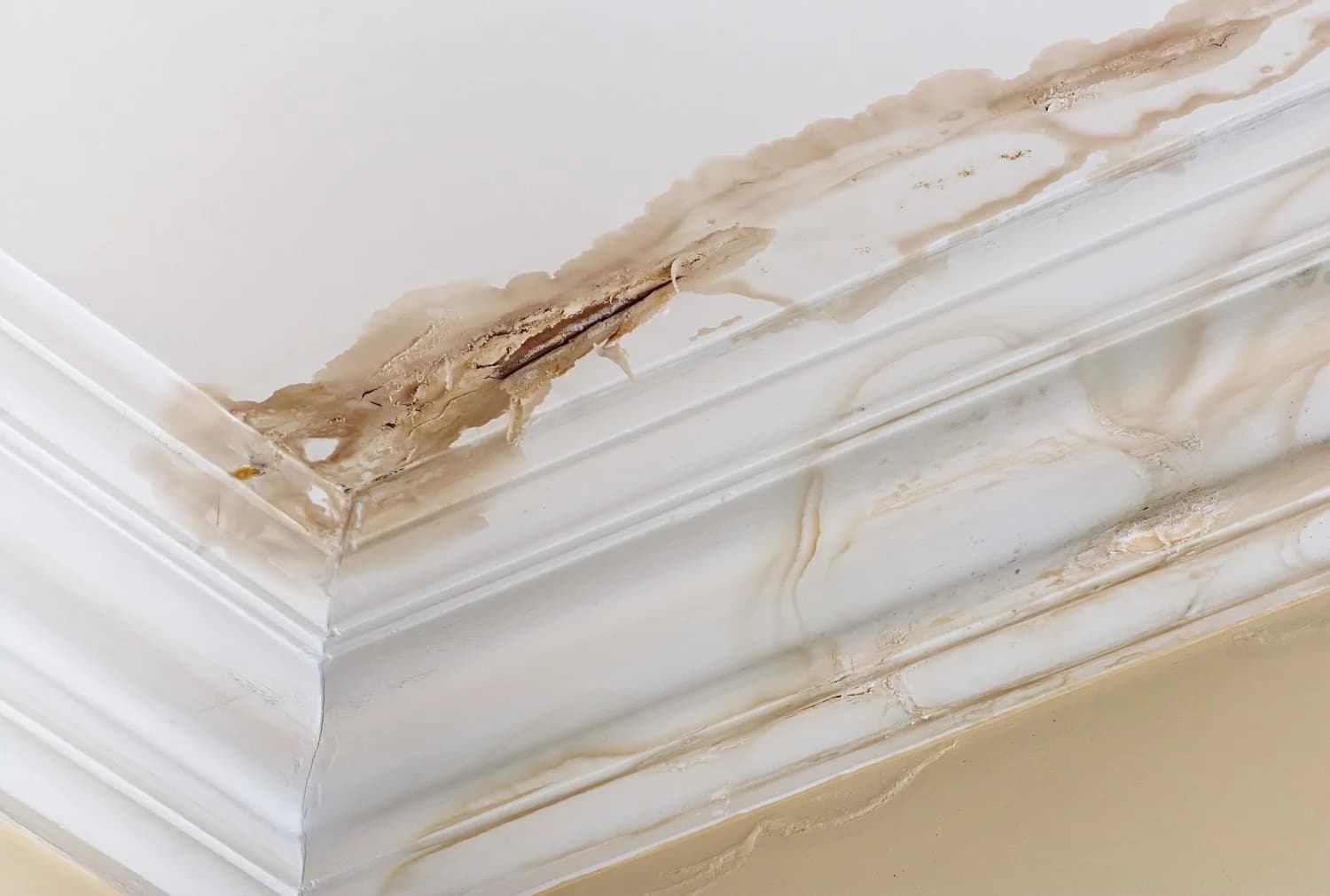
Leaks also tend to leave a trail. You'll often see staining that runs downhill along rafters or the roof deck, brown or yellowish rings on the ceiling that grow with each storm, and dampness concentrated near roof penetrations. If the wet patch always lines up under the same chimney or skylight after it rains, you're almost certainly dealing with a leak.
How Condensation Behaves
Condensation plays by different rules. It forms when warm, moist air from inside the home rises into a cooler attic and the moisture settles on the cold underside of the roof. In San Diego, our cool, damp marine-layer mornings can encourage this even on days it never rains, which is the biggest giveaway.
Instead of one concentrated drip, condensation tends to show up as a broad film of moisture, frost on metal nails, or a general dampness spread across the underside of the deck. It often appears worst in winter mornings and improves as the day warms, and it usually has more to do with poor ventilation or trapped humidity than with anything wrong with the roof surface itself.
Quick Checks You Can Do
A few simple observations usually point you in the right direction:
- Note whether the moisture follows rain or shows up on dry mornings
- Look for a single concentrated source versus widespread dampness
- Check your attic vents to see if airflow is blocked or insufficient
- See whether bathroom or kitchen exhaust fans vent into the attic by mistake
- Watch whether the dampness clears as the day warms and dries out
These clues won't replace a professional diagnosis, but they help you describe the problem accurately and avoid chasing the wrong fix.
Why Getting It Right Matters
The danger is treating one problem as the other. Sealing a roof that's actually suffering from condensation does nothing, and trapping that moisture can make it worse, eventually rotting the deck or feeding mold. On the flip side, adding more ventilation won't stop water that's genuinely pouring in through failed flashing.
That's why a professional look is so valuable. An experienced roofer can trace moisture to its true source, distinguish a ventilation issue from a roofing one, and recommend the fix that actually solves your problem rather than masking it.
It's also common for the two issues to overlap. A poorly ventilated attic can leave the deck damp enough that a genuine leak hides in the background, or a small leak can add just enough humidity to tip an already stuffy attic into condensation. Sorting out which factor is driving the problem is exactly where trained eyes earn their keep.
Not sure whether you're dealing with a leak or condensation? Contact our team or give us a call, and we'll get to the bottom of that attic moisture before it does any real damage.
Ready for a roof you can count on?
Call (619) 501-2138 or request your free, no-pressure consultation.