
If you've looked into fire-hardening your home or wrestled with your insurance lately, you've probably bumped into a wall of jargon: WUI, Fire Hazard Severity Zone, Chapter 7A. These terms decide what's required of your home and what your insurer expects. Here's what they actually mean for a San Diego homeowner.
WUI: where homes meet the wildland
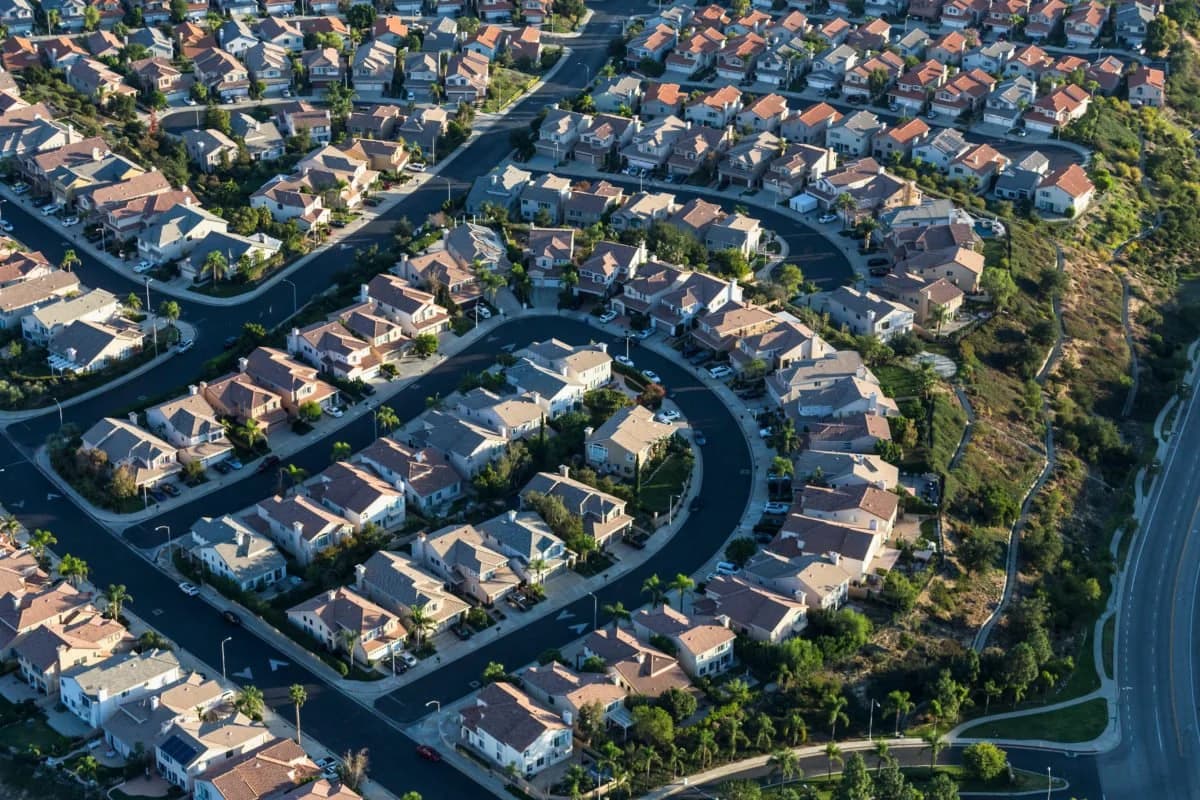
WUI stands for Wildland-Urban Interface — the areas where neighborhoods meet open, undeveloped, fire-prone land. San Diego County has a lot of it: the canyon edges, foothills, and backcountry communities like Scripps Ranch, Rancho Bernardo, Poway, Alpine, Ramona, Julian, Jamul, Valley Center, and Fallbrook. If your home backs up to a canyon or open space, you very likely live in the WUI, and that's exactly where wind-blown embers do the most damage.
Fire Hazard Severity Zones: the official map
California maps fire risk into Fire Hazard Severity Zones — moderate, high, and very high. The zones are based on factors like vegetation, terrain, and fire history, and they're the official designation that determines whether the state's wildfire building rules apply to your property. You can look your address up, and it's worth doing, because the zone is what triggers the requirements below.
Chapter 7A: the building code for fire zones
If your home is in a designated zone, the California Building Code's wildfire provisions — known as Chapter 7A — apply to new construction and to many retrofits. Chapter 7A sets fire-resistance standards for the parts of a home most exposed to embers: roofs, vents, eaves, exterior walls, and more. For roofing specifically, that generally means a Class-A fire-rated roof assembly and ember-resistant vents tested to the ASTM E2886 standard. It's the technical backbone behind most of the home-hardening work we do.
Why this matters beyond the code
These designations don't just govern construction — they increasingly drive insurance. Carriers use wildfire risk scores to decide whether to write or renew a policy, and California's "Safer from Wildfires" rules require them to credit the same mitigation measures Chapter 7A calls for. In other words, the work that brings your home up to code is also the work that helps keep it insurable.
The good news
Living in the WUI doesn't mean you're stuck. The highest-impact fixes — a Class-A roof and ember-resistant vents — are things a roofer can address directly, often without a full rebuild. If you're not sure which zone you're in or what your roof needs, that's an easy first conversation.
Request a free inspection or give us a call — we're a family-owned San Diego roofer, licensed and insured (CSLB #247618), and we've worked these hillside communities since 1967.
Ready for a roof you can count on?
Call (619) 501-2138 or request your free, no-pressure consultation.