
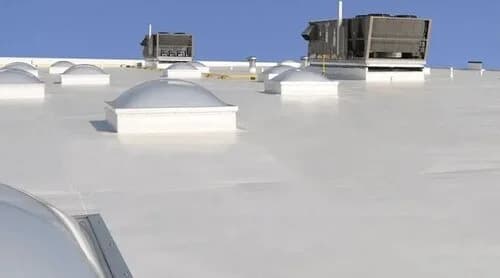
If your flat roof is aging but not failing, you don't always have to jump straight to a full tear-off. A silicone roof coating can be a smart middle path — a seamless, waterproof layer rolled or sprayed over the existing surface that can add years of service and a bright, heat-reflecting finish. For the right roof at the right time, it's one of the most cost-effective moves a building owner can make.
What a Silicone Coating Is
A silicone coating is a thick, fluid-applied membrane that cures into a continuous rubbery skin over your flat roof. Because it goes on as a liquid, it conforms to every seam, drain, and penetration and leaves no joints for water to find. Silicone in particular is prized for how well it holds up to standing water — the bane of flat roofs — without breaking down the way some other coatings can.
The Two Big Benefits
The first benefit is waterproofing. A fresh coating seals up the small cracks, aging seams, and weak spots that develop on a flat roof over time, restoring a watertight surface without disturbing what's underneath.
The second is heat. Silicone coatings are typically bright white and highly reflective, which matters a great deal in San Diego. Instead of a dark roof soaking up the sun and radiating heat into the building below, a reflective coating bounces much of that solar energy away, easing the load on your air conditioning through our long warm season.
When a Coating Makes Sense
A coating is a restoration, not a resurrection. It works best on a roof that's structurally sound and watertight enough to be a good candidate — aging and worn, but not saturated or rotting underneath. If water has already gotten into the insulation or the deck, a coating would just trap the problem. That's why an honest inspection comes first: the goal is to confirm the roof is a fit before committing.
It's also worth knowing that coatings are most effective on flat and low-slope roofs, not on steep shingle or tile roofs, where different solutions apply.
Timing matters as well. The ideal moment to coat is while the roof is still in decent shape, before small problems become leaks and before water reaches the deck. Wait too long and a coating that would have added years instead becomes a band-aid over a roof that already needs replacing. Acting at the right point in a flat roof's life is what turns a coating from a stopgap into a genuinely smart investment.
The Upkeep Side
A coated roof isn't maintenance-free, and coatings do wear over time. Periodic inspections and occasional recoating keep the protection intact, and that ongoing cycle is generally far cheaper than a full replacement. Think of it as a way to stretch a flat roof's useful life and buy time before a larger investment.
It helps to keep a coated roof clear of standing debris, leaves, and grit, especially around drains and low spots where water tends to pool. After San Diego's occasional heavy downpours, a quick look for ponding or thin areas lets you catch wear early. Caught in time, a worn patch is a simple recoat rather than a leak working its way into the building. That kind of light, regular attention is exactly what makes a coating such a cost-effective way to manage a flat roof over the long run.
Wondering whether your flat roof is a good candidate for a coating? Request an estimate or give us a call — we'll inspect the surface honestly and tell you whether a coating will genuinely add years or just delay the inevitable.
Ready for a roof you can count on?
Call (619) 501-2138 or request your free, no-pressure consultation.