
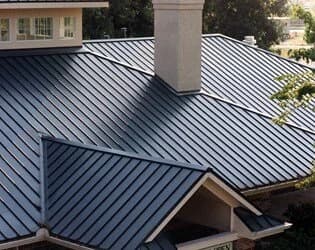
When a ceiling stain shows up near a fireplace, most homeowners blame the roof itself. More often than not, the real culprit is the flashing where the chimney meets the roof. It's a small detail tucked into a spot you never look at, and it quietly does one of the hardest jobs on the entire roof: keeping water out of a seam between two very different materials.
Why Chimneys Are Such a Common Leak Point
A chimney interrupts the smooth slope of your roof. Water that would otherwise run cleanly downhill now hits a solid obstacle and has to be redirected around it. That job falls to a system of metal flashing pieces tucked under the shingles and against the masonry. When any one of those layers loosens, corrodes, or pulls away, water finds the gap. In fact, flashing failures are the number one cause of rainy-season leaks on local roofs, and chimneys are among the most common spots they show up.
It doesn't help that chimneys take a beating in San Diego. The strong heat-and-cool cycle of our climate, plus the occasional Santa Ana gust, works the metal and sealant loose over years. By the time the first real rain arrives, a tired flashing detail is ready to let water through.
The Layers That Keep Water Out
Good chimney flashing isn't one piece of metal. It's a few working together:
- Base or step flashing that weaves in behind each course of shingles along the sides
- Counterflashing set into a groove cut in the masonry, overlapping the step flashing
- A cricket or saddle on the uphill side of wider chimneys to split water around it
- Sealant at the masonry joints as a final line of defense, not the main one
Warning Signs You Can Spot From the Ground
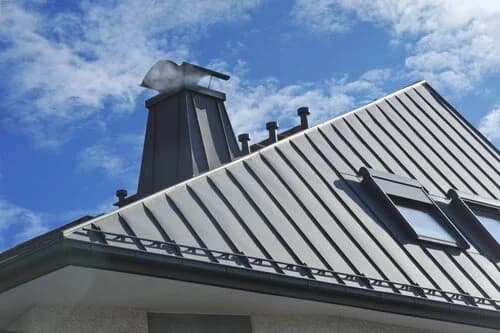
You don't need to climb up to catch trouble early. Look for rust streaks running down the chimney, white mineral deposits on the brick, or sealant that has cracked and pulled away. Inside, a stain on the ceiling or wall near the chimney, a musty smell in the attic, or peeling paint on a nearby wall all point to water sneaking past the flashing. Learning to read the warning signs of water damage in your ceiling helps you connect an indoor stain to its source overhead.
If your chimney was reroofed by simply slathering on new tar instead of replacing the metal, expect that quick fix to fail. Sealant alone has a short life under our sun, and it's no substitute for properly layered flashing.
When to Bring in a Pro
Flashing repair is precise work. The pieces have to overlap in the right order, the counterflashing should be set into the masonry rather than just caulked on top, and the surrounding shingles often need to be lifted and rewoven. A patch job that skips those steps tends to leak again within a season or two, which is part of why a professional repair beats a quick patch job when it comes to flashing.
Noticing rust, stains, or sealant pulling away around your chimney? Schedule a free inspection or give us a call — we'll check the flashing and catch a small problem before the next storm turns it into a big one.
Ready for a roof you can count on?
Call (619) 501-2138 or request your free, no-pressure consultation.