
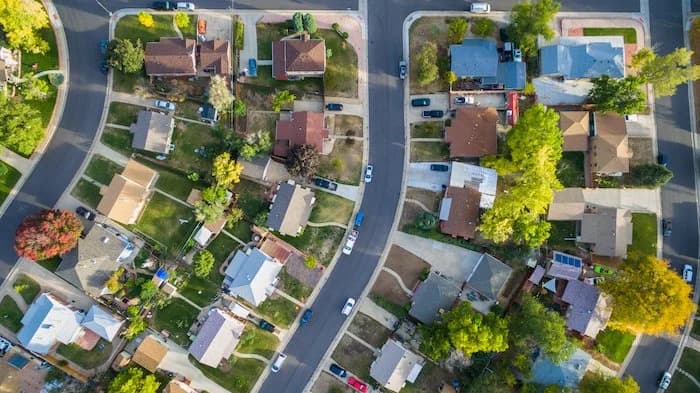
When people picture losing a home to wildfire, they imagine a wall of flame. But in San Diego's fires, that's usually not what gets a house. The bigger threat is the shower of glowing embers the Santa Ana winds carry far ahead of the fire — and one of the easiest ways for those embers to get inside is through your attic vents.
Your attic has to breathe — and that's the problem
Every home needs attic ventilation. Vents at the eaves, gable ends, and ridge let air flow through so the attic stays cool and dry, which protects your roof and lowers your cooling bills. (We cover how that works in our guide to roof and attic ventilation.)
The catch is that those same openings can act like funnels during a fire. Wind-driven embers land on the roof, get pulled toward a vent by the natural airflow, and slip inside — where they can land on dust, stored boxes, or bare framing and start a fire in the one part of your home you can't see. Many houses lost in California wildfires were never touched by direct flame. They were ignited from the inside out, through their vents, sometimes hours after the fire front had passed.
Older vents are the weak link
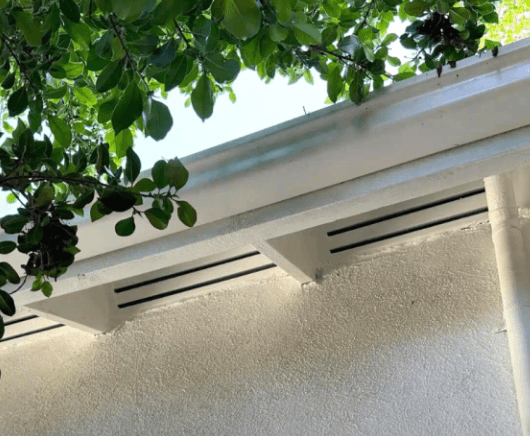
If your home is more than a couple of decades old, there's a good chance it has plain plastic or coarse-screen vents. Plastic can melt and warp under heat, opening a clear path inside, and a coarse screen does little to stop a small ember. These were never designed with wildfire in mind.
What ember-resistant vents do differently
Ember-resistant vents are engineered and lab-tested to keep embers and flames out while still letting the attic breathe. Depending on the product, they use fine non-combustible mesh, a baffled internal path that embers can't travel in a straight line through, or an intumescent coating that swells shut under fire heat. All are made of metal that won't melt like old plastic vents.
Where to check
The vents worth looking at are the same ones that make your attic breathe:
- Eave and soffit vents — low and close to the ground, where embers blow in.
- Gable vents — the large vents in the wall at each end of the attic.
- Roof and dormer vents — up high on the roof itself.
Swapping vulnerable vents for ember-resistant models is one of the highest-value, lowest-cost steps you can take, and it works hand in hand with the rest of hardening your home for wildfire.
Don't wait for a red-flag warning
The time to upgrade your vents is on a calm day before fire season, not when a Santa Ana is already in the forecast. We're a family-owned San Diego roofer, licensed and insured (CSLB #247618), serving the county since 1967.
Want to know whether your vents would hold up to blowing embers? Request a free inspection or give us a call — we'll check what you have and recommend the right ember-resistant upgrades.
Ready for a roof you can count on?
Call (619) 501-2138 or request your free, no-pressure consultation.