
Roofing vs. Solar in San Diego
In sunny San Diego, solar is one of the smartest investments a homeowner can make — but here's the rule we never bend: never put solar panels on an aging roof. Solar panels are built to last around 25 years, and if your roof has fewer years left than that, you will pay twice — once to remove the entire array so the roof can be replaced, and again to remount it on top of the new roof. Get the sequence right and solar pays off for decades. Get it backwards and the roof underneath quietly fails while a $20,000-plus array sits on top of it.
We're a roofing company first, and we've been roofing San Diego since 1967. That perspective is exactly why we tell people to assess the roof before they sign a solar contract — not because we're against solar, but because we've seen what happens when the order gets reversed.
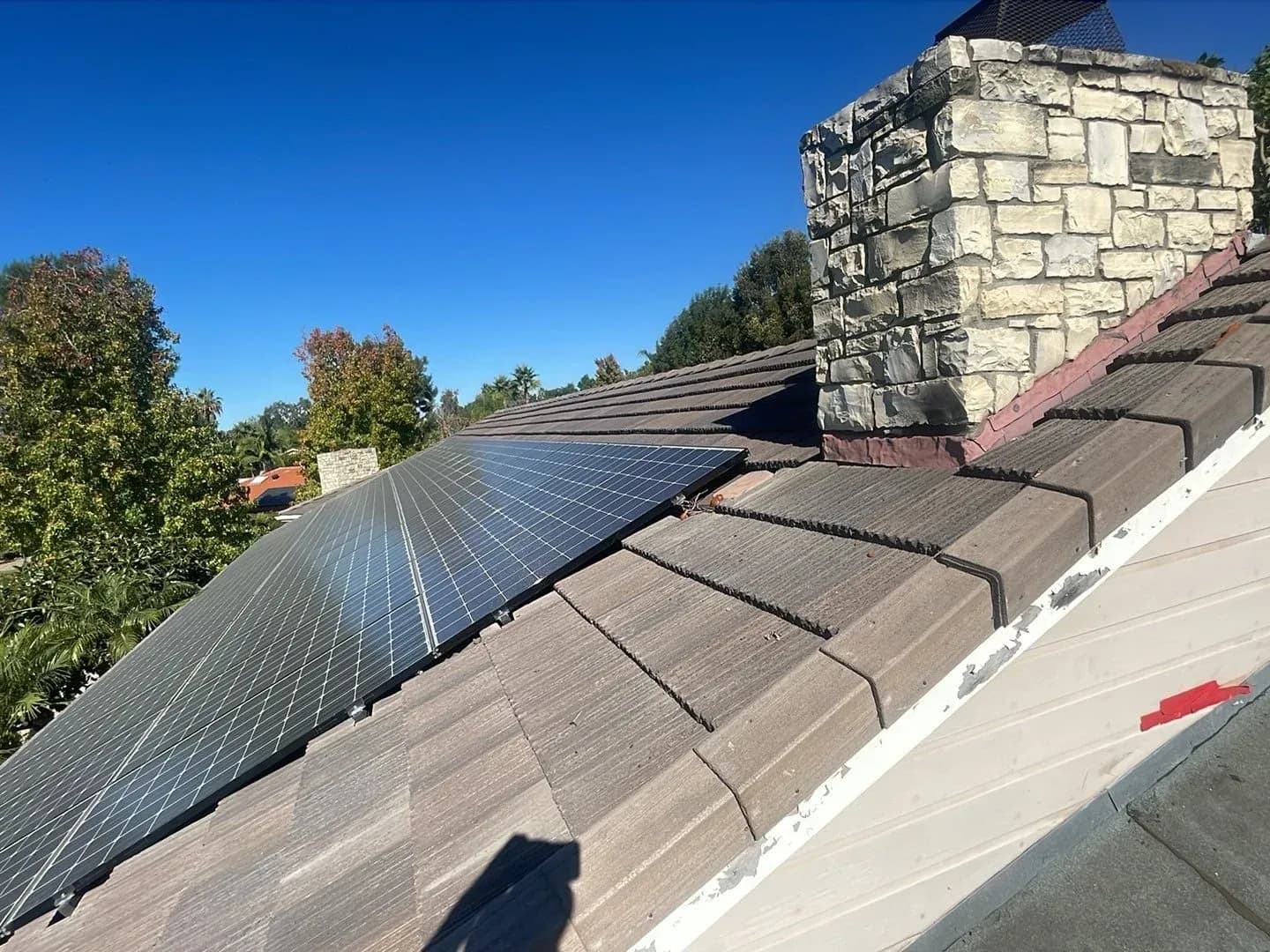
Why solar makes sense in San Diego
The case for solar here is genuinely strong, and we won't pretend otherwise. San Diego gets abundant year-round sun, our mild climate keeps panels producing reliably, and California's electricity rates are among the highest in the country. Those three things together — lots of sun, steady weather, and high bills to offset — make San Diego close to an ideal place to generate your own power.
So this isn't a "solar bad, roofing good" argument. It's about doing solar the right way so it actually delivers the savings you're paying for.
The costly mistake: solar on an old roof
Here's the trap we see again and again. A solar-first company knocks on the door, runs the numbers on your electric bill, and the savings look great. What often gets glossed over is the condition of the roof those panels are about to sit on.
Solar panels typically last about 25 years. If your roof only has 5 or 10 years of life left, the math falls apart. Long before the panels wear out, the roof underneath them will need to be replaced — and now those panels are in the way. Removing a solar array isn't a quick afternoon's work. Every mounting bracket has to come off, the panels get carefully detached and stored, the roof gets done, and then the entire system has to be remounted and reconnected. We've redone plenty of San Diego roofs with panels already installed, and it always adds significant time and cost compared to a clear roof.
That's money you'd never have spent if the roof had been handled first. If you have five or fewer years left on your roof, don't let a solar company talk you into panels yet.
The right sequence: roof first, then solar
The honest path is simple: assess the roof, replace it if it needs it, then add solar.
A free roof inspection tells you exactly where you stand. If your roof is sound and has plenty of life left, great — you can move ahead with solar on a foundation that will outlast the panels. If it's near the end, it makes far more sense to handle the roof replacement first, then mount panels on a fresh, fully warrantied roof. Once the roof is done right, adding solar is a much simpler, cleaner installation — and you won't be paying to peel the array off again in a few years.
If you're weighing whether your roof has enough life left to skip a replacement, our guide to roof replacement and our cost guide can help you think it through, and any honest inspection should give you a straight answer.
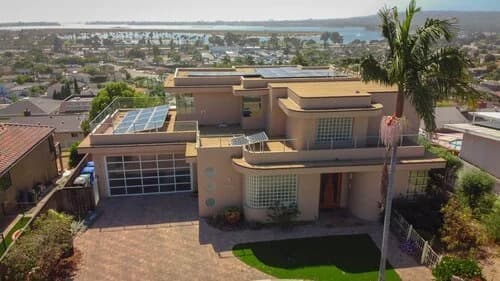
How a roofer sees it differently than a solar-first company
For a solar company, the roof is mostly an obstacle — a surface the panels happen to need. That's not a knock on every solar installer, but it shapes how they approach a job. Many solar-first outfits don't do roofing in-house at all; they subcontract it, spin up a separate roofing branch, or simply work around whatever roof is already there so they can get the array installed.
We come at it from the opposite direction. Our entire focus is making sure the surface under those panels is completely waterproof and built to last. In our decades roofing San Diego, we've learned that the roof is the part that protects everything below it — including the inside of your home — so it should never be treated as something to get out of the way. A roofer's job is to make sure that when the panels do eventually come down 25 years from now, the roof beneath them is still doing its job.
Tile vs. shingle: what it means for mounting solar
San Diego's tile-heavy housing stock adds a wrinkle that matters for solar, and it's worth understanding before anyone starts drilling into your roof.
- Asphalt shingle roofs are the most straightforward to mount solar on. Brackets attach through the shingles into the structure, and with proper flashing the penetrations stay watertight. On a shingle roof we use synthetic underlayment, and a sound, recently installed shingle roof is a clean, predictable surface for an array.
- Tile roofs require more care. Tile is rigid and can crack under foot traffic, and every mounting point has to be flashed correctly so water can't get past the tile to the underlayment below. On San Diego's many 1960s–80s tile roofs, the bigger issue is often the underlayment, not the tile — the felt beneath the tile typically wears out in 20 to 30 years even though the tile lasts 50-plus. If your tile roof is at that age, the smart move is a relay (lifting the tile, replacing the underlayment, and re-laying the same tile) before any panels go up. Our tile roofs guide explains how that works.
Either way, the principle holds: confirm the roof is in good shape and properly waterproofed before you anchor a 25-year array to it.
Resilient Roofing is a roofing company first
We want to be straight about who we are: Resilient Roofing is a roofing company — we don't sell or install new solar systems. That actually works in your favor. With no panels to sell, we have zero incentive to talk you into solar, so our only concern is the roof underneath it. We believe in solar — many of us have it on our own homes — we just don't profit from it.
What we are set up to do is work with your existing solar. If you already have an array on a roof that needs replacing, you've got two easy paths:
- We coordinate with your solar company. We'll work directly with your existing solar installer so their team detaches and resets the panels while we handle the roof. This keeps your solar installer's warranty intact — the people who installed your system are the ones who touch it — and you don't have to project-manage two trades.
- We handle the panels ourselves. We're licensed to detach your array, redo the roof properly, and reset the panels as part of the same job.
Either way, your roof gets done right. Our number-one priority, start to finish, is making sure the surface under those panels is completely waterproof and built to last.
If you're considering solar, the best first step is the same as it always is: a free, no-pressure inspection of your actual roof. We'll tell you honestly whether you're looking at a repair, a relay, a full replacement, or a roof that's ready for panels today — and for any pricing questions, our roofing cost guide lays out the real San Diego ranges. When you're ready, get in touch and we'll come take a look.
Frequently Asked Questions
Should I replace my roof before installing solar in San Diego?
Yes, if your roof is near the end of its life. Solar panels last about 25 years, so if your roof has fewer years left than that, it will need replacing while the array is still good — meaning you'd pay to remove the panels, redo the roof, and remount everything. If your roof is sound with plenty of life left, you can go straight to solar. A free roof inspection tells you which situation you're in.
Why does putting solar on an old roof cost me twice?
Because the roof will fail under the panels before the panels wear out. When that happens, the entire array has to be detached — every mounting bracket removed, panels stored, the roof replaced, then the whole system remounted and reconnected. That's a major added cost on top of the roof work, and it's money you'd never spend if the roof had been handled first. As a rule, if you have five or fewer years left on your roof, don't add panels yet.
Is solar worth it in San Diego?
For most homes, the case is strong. San Diego gets abundant year-round sun, a mild climate that keeps panels producing reliably, and some of the highest electricity rates in the country to offset. Those factors together make San Diego close to an ideal place for solar — as long as the roof underneath the panels is in good shape first.
Can I install solar on a tile roof?
Yes, but tile takes more care than shingle. Tile is rigid and can crack, and every mounting point must be flashed so water can't reach the underlayment beneath. On San Diego's many 1960s–80s tile roofs the underlayment (not the tile) is usually the weak point — the felt wears out in 20–30 years while the tile lasts 50-plus. If your tile roof is at that age, a relay (lifting the tile, replacing the underlayment, re-laying the same tile) is the smart move before any panels go up.
Should I hire a roofing company or a solar company for solar?
It depends on your priority, but the roof is the foundation everything sits on. Many solar-first companies treat the roof as an obstacle, subcontract roofing out, or work around whatever roof is there. A roofing company's focus is making sure the surface under the panels is completely waterproof and built to outlast the array. We recommend getting the roof assessed and, if needed, replaced by roofers first — then adding solar on a sound, warrantied roof.
Does Resilient Roofing install solar?
We don't sell or install new solar systems — Resilient Roofing is a roofing company, and that focus is a feature, not a limitation: with no panels to sell, our only concern is the roof under them. We work with your existing solar two ways: we can coordinate directly with your solar company so their crew detaches and resets the panels (keeping your installer's warranty intact) while we do the roof, or we're licensed to handle the detach and reset ourselves as part of the job.
Ready for a roof you can count on?
Call (619) 501-2138 or request your free, no-pressure consultation.