
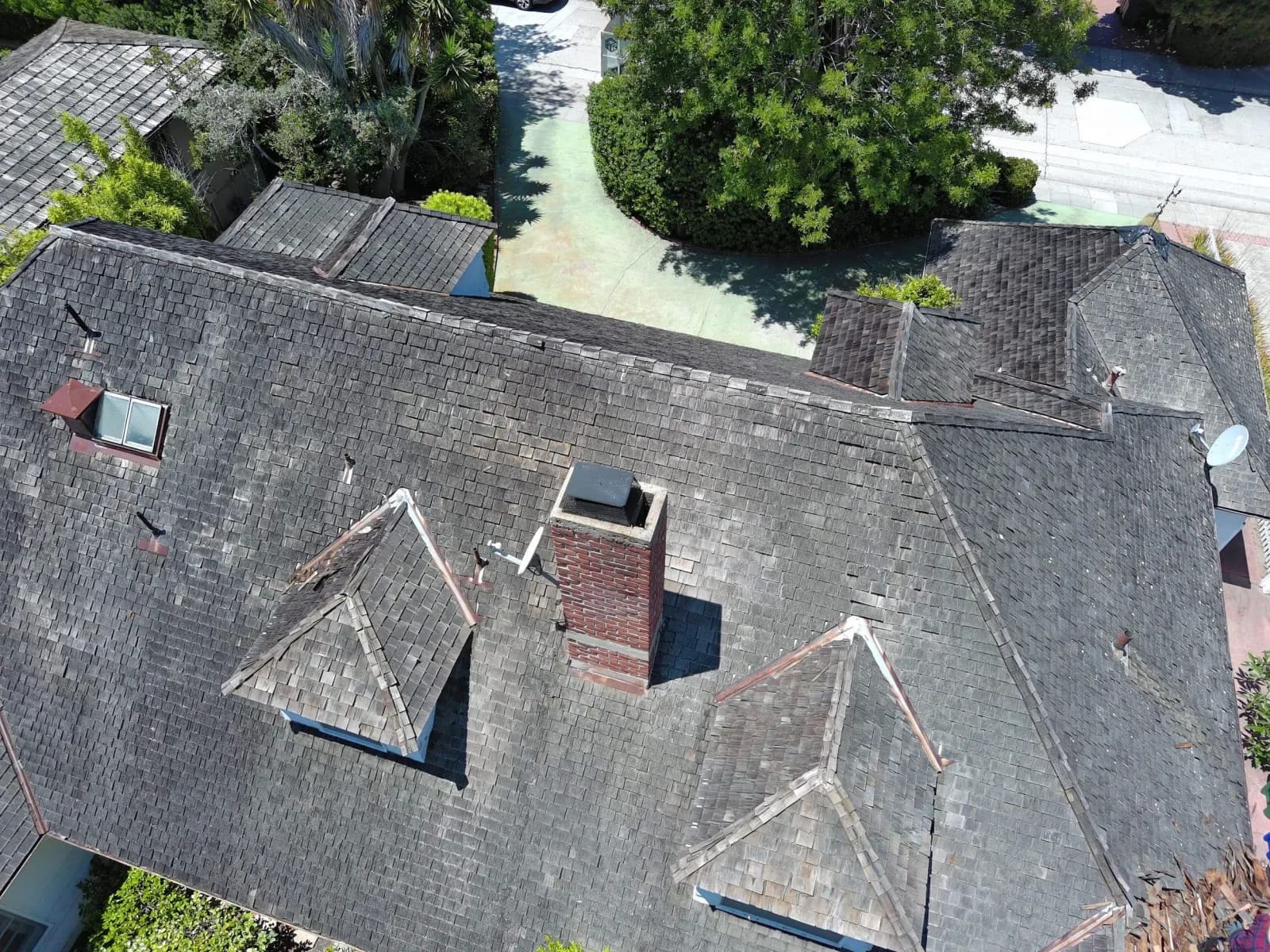
San Diego rain has a reputation for being gentle, but the storms that actually cause trouble rarely arrive quietly. When a low-pressure system swings in off the Pacific, it brings wind right along with the water, and that combination is what tests a roof. Rain falling straight down lands on surfaces built to shed it. Rain blowing sideways gets underneath shingles, behind flashing, and into seams a calm shower would never reach.
Why Wind Changes Everything
A roof is essentially a layered system designed to send water downhill by gravity. Wind disrupts that logic. Gusts can lift the bottom edges of shingles just enough for water to drive up and under them, and they push moisture horizontally into the vertical gaps around chimneys, vents, and sidewalls. The same roof that stays bone-dry in a steady drizzle can start weeping during a windy squall, simply because the water is no longer moving in the direction the roof was built to expect.
That is why so many local homeowners discover a leak only during the first big winter blow rather than during the season's earlier, milder rains.
The Homes Most at Risk
Not every house faces the same exposure. A few features tend to put a roof squarely in the line of fire:
- Coastal and hilltop homes that catch unobstructed wind off the ocean or up a canyon
- Older roofs where shingle adhesive has dried out and edges no longer seal down
- Homes with many penetrations chimneys, skylights, multiple vents where flashing does the heavy lifting
- Low-slope or transition areas where water moves slowly and wind can push it backward
Where the Water Usually Gets In
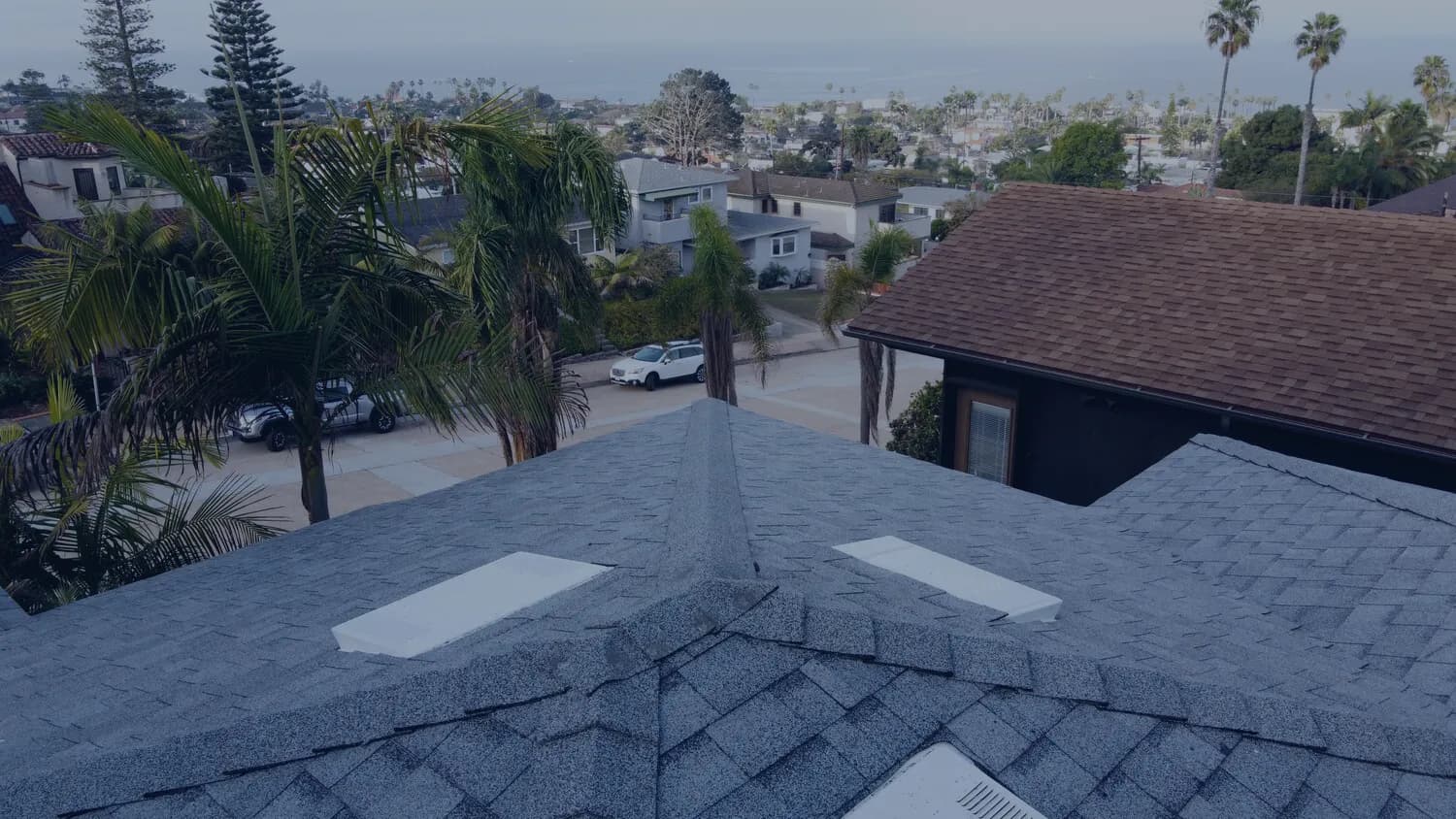
In our experience, wind-driven leaks rarely come from the open field of a roof. They come from the edges and the details. Ridge caps that have loosened, flashing that has pulled away from a chimney, drip edge that was never installed tightly, and valleys where two roof planes meet are the usual suspects. Stucco walls that rise above a roofline are another quiet culprit, since wind can drive rain into hairline cracks in the stucco and let it travel down behind the wall before it ever shows up as a stain inside.
Because the water enters at an angle and travels before it drips, the wet spot on your ceiling is often nowhere near the actual point of failure. That is part of what makes these leaks so frustrating to chase down without a trained eye.
Getting Ahead of the Season
The good news is that wind-driven leaks are very preventable. Before the heavy storms set in, it is worth having someone confirm that shingle edges are sealed, flashing is tight and properly lapped, and ridge and vent components are secure. Sealing small gaps and replacing a few worn pieces of flashing is far cheaper than repairing a soaked ceiling, ruined insulation, and the drywall underneath. A roof that is buttoned up at its edges and details will shrug off the same storm that would have soaked a neglected one.
If you have a home that catches the wind or a roof with a few years on it, now is the time to look, well before the heart of the rainy season puts those weak spots to the test. Reach out to our team or give us a call and we will inspect the vulnerable spots before the next windy storm rolls through.
Ready for a roof you can count on?
Call (619) 501-2138 or request your free, no-pressure consultation.