
You're cleaning the gutters and notice a layer of coarse, sandy grit at the bottom, like someone emptied a bag of black sand up there. Those are granules from your asphalt shingles, and finding them is one of the clearest signals your roof is giving you about its age and condition. A little is normal. A lot is your roof telling you something you'll want to listen to.
What Those Granules Are For
The colored granules embedded in asphalt shingles aren't just for looks. They're the shingle's sunscreen. That mineral coating shields the asphalt underneath from ultraviolet rays, which is the single biggest thing that ages a shingle roof in our part of the world. The granules also add fire resistance and help the shingle shed water cleanly off the slope.
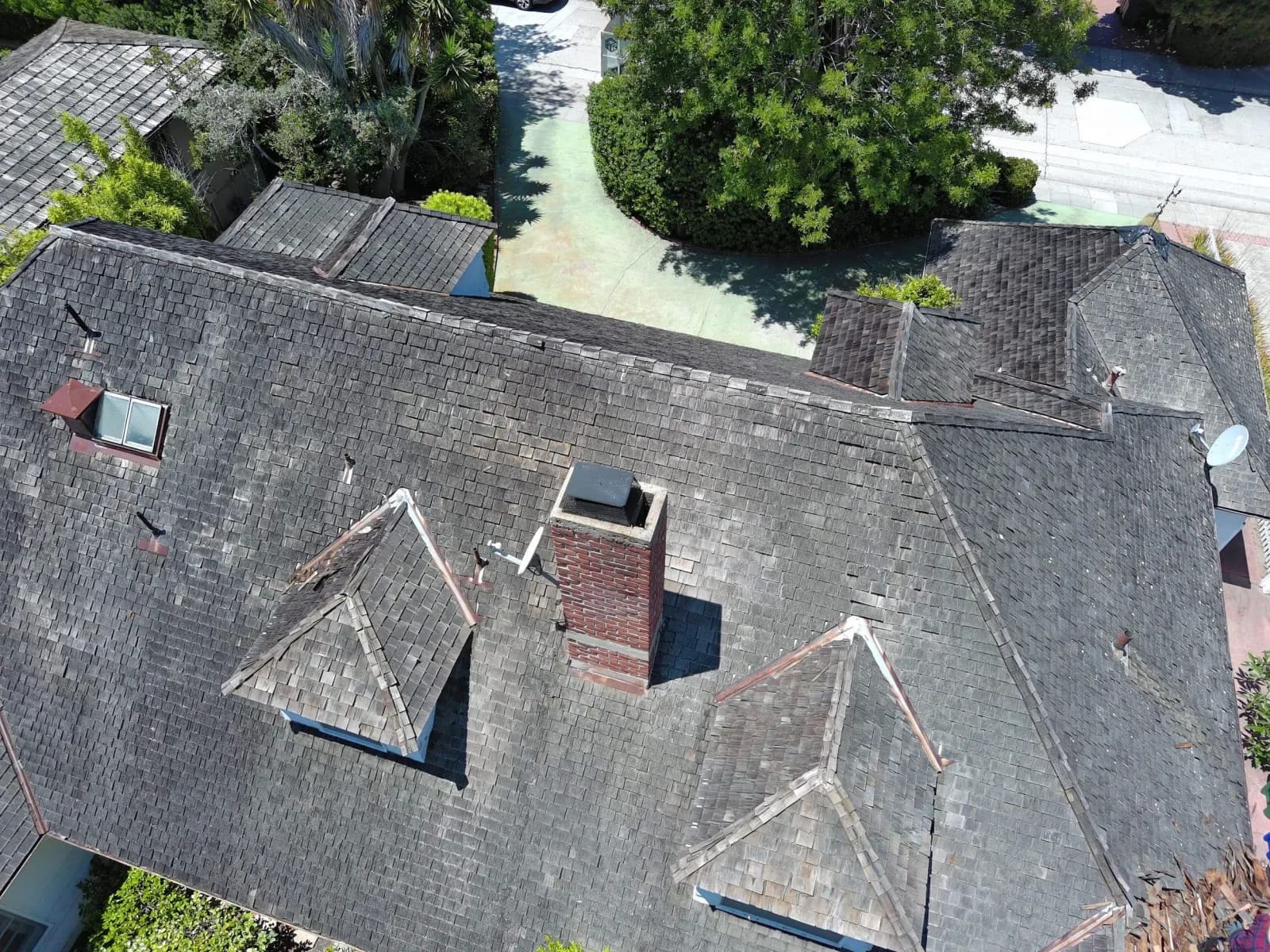
Strip away the granules and the black asphalt below is left exposed to the sun. From there, the shingle dries out, gets brittle, and breaks down much faster — which is why granule loss is less a cosmetic issue than an early warning about the roof's remaining life. Once a patch goes bald, it tends to spread, because the bare asphalt heats up more and ages the area around it. That's why it's worth paying attention the first time you notice grit collecting downstream.
Why Granules Come Loose
Some granule loss is completely expected. A brand-new roof sheds the loose granules left over from manufacturing during its first few rains — that's normal and nothing to worry about. The losses that matter come later, driven by:
- UV exposure, which is relentless under the San Diego sun and slowly weakens the bond
- Age, as shingles near the end of their lifespan naturally let go of their coating
- Heat cycling, the daily expand-and-contract that loosens the surface over years
- Hail or heavy foot traffic, which knocks granules off in patches
How to Tell Normal From Trouble
A thin scattering of granules after a storm on an older roof is usually fine. The warning signs are heavier accumulations in the gutters, especially paired with bald, dark spots visible on the shingles themselves or shingles that look curled, cracked, or worn thin in patches. When you can see the asphalt mat through worn areas, the roof has lost its protection and is on borrowed time.
It helps to compare slopes, too. The south- and west-facing sections take the most sun in our climate, so they typically wear first. If those slopes look noticeably more weathered than the shaded ones, that uneven aging is another clue that UV is doing its work.
What to Do About It
If you're seeing significant granule loss, the smart move is an inspection rather than a guess. Sometimes the answer is that you've got a few good years left and just need to monitor it. Sometimes it means the roof is nearing the end and it's time to weigh repair against replacement before a leak forces the decision. One thing not to do is pressure-wash the roof to clean it up, since the force strips even more granules and accelerates the very wear you're worried about. Either way, knowing where you stand beats being surprised by the first hard rain of the season.
Pulling grit out of your gutters and wondering what it means? Request a free inspection or give us a call — we'll assess how much life your shingles have left and help you plan ahead.
Ready for a roof you can count on?
Call (619) 501-2138 or request your free, no-pressure consultation.