
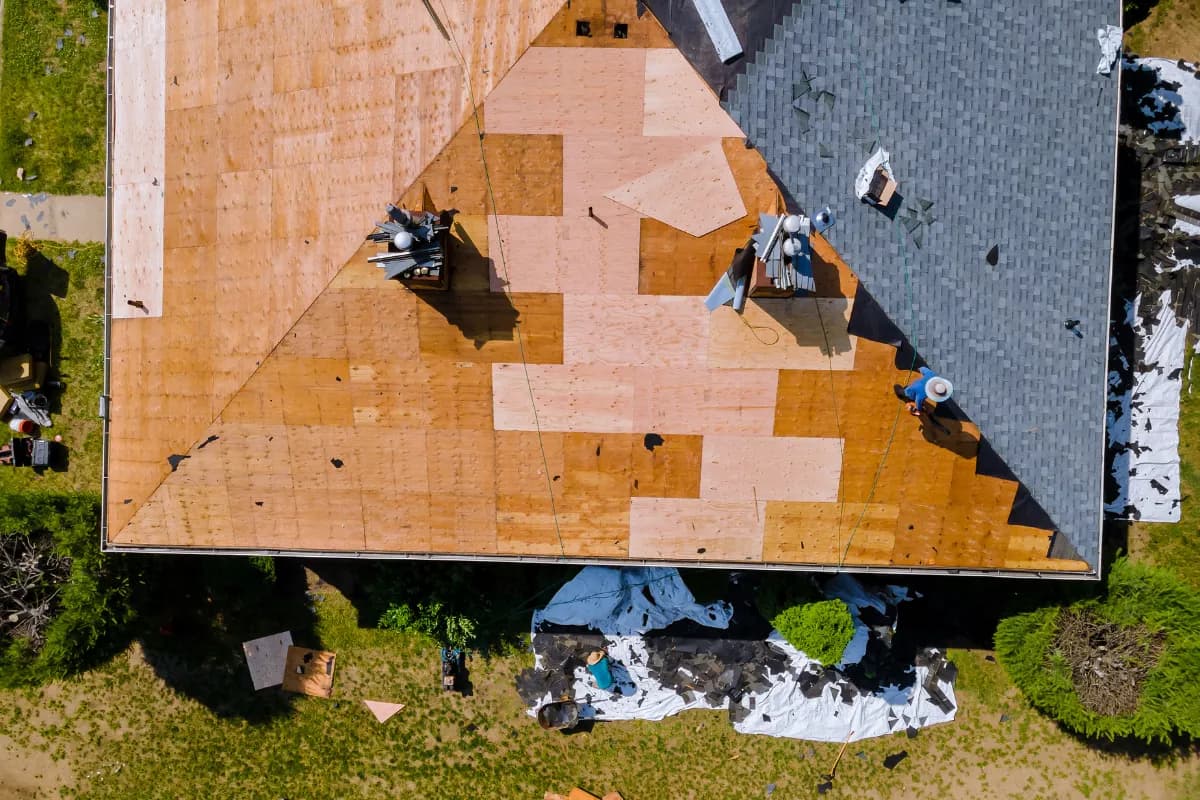
Most people picture a roof as just the shingles or tiles they can see from the street. But a roof is really a system several layers working together, each with a specific job. Understanding what's underneath helps you make smarter decisions when it's time to repair or replace, and it explains why a quality installation matters so much. Together these layers do far more than cap the building; they're a big part of how a roof protects more than just the top of your house. Let's peel back the layers of a typical San Diego roof, from the wood up.
The Deck: Your Roof's Foundation
Everything starts with the roof deck, usually sheets of plywood or oriented strand board fastened to the trusses. The deck is the structural base that every other layer attaches to, so its condition is critical. During a tear-off, this is the moment a roofer can spot hidden trouble water damage, rot, or soft spots that need replacing before anything new goes on.
You can't see the deck once a roof is finished, but a weak or compromised deck undermines everything above it. That's why a proper installation always includes inspecting and repairing it. Skipping that step to save a little money is a false economy that tends to resurface a few years later.
Underlayment: The Hidden Water Barrier
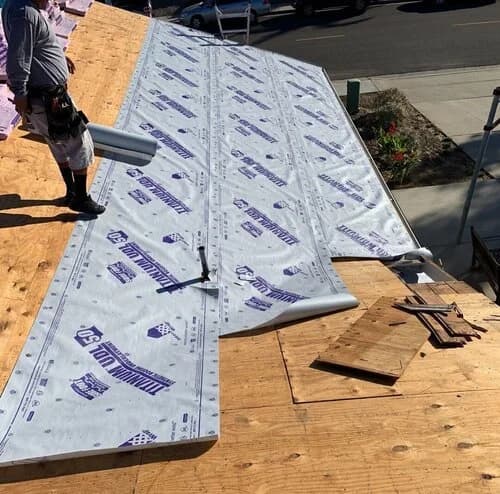
Over the deck goes the underlayment a protective layer rolled across the entire roof before the shingles or tiles. Modern synthetic underlayments are tough, water-resistant, and act as a crucial backup. If wind-driven rain ever slips past the surface material during one of our heavy winter storms, the underlayment is what keeps that water from reaching the wood and your ceilings below.
In valleys and along edges, an extra waterproof membrane is often added for reinforcement, since those areas channel the most water and are the most leak-prone. For all that it does, underlayment is the most important roofing layer you'll never see. Think of the underlayment as the unsung safety net beneath the surface you'll likely never see it again, but you'll be glad it's there during a hard San Diego downpour.
Flashing: Sealing the Vulnerable Spots
Flashing is the thin metal used to seal the places where the roof meets something else chimneys, skylights, vents, and the valleys where two slopes converge. These transitions are where the vast majority of leaks begin, so flashing does outsized work for how little of it there is.
Good flashing, properly installed and sealed, is one of the clearest marks of a quality roof. When leaks show up on an otherwise sound roof, worn or poorly installed flashing is very often the culprit. It's also one of the first things a careful roofer examines during an inspection, precisely because it does so much work in such a small footprint.
The Surface and Ventilation
Finally comes the layer you actually see: the shingles, tiles, or panels that shed water and stand up to San Diego's sun, salt air, and Santa Ana winds. This top layer gets the spotlight, but it only performs as well as the layers beneath it.
Tying the whole system together is ventilation ridge vents, soffit vents, and attic airflow that lets heat and moisture escape. Without it, trapped heat bakes the roof from below and shortens its life, while trapped moisture invites rot. A healthy roof breathes.
Curious about the condition of the layers you can't see on your own roof? Contact our team or give us a call and we'll inspect your roof from the deck up, then explain exactly what we find in plain language.
Ready for a roof you can count on?
Call (619) 501-2138 or request your free, no-pressure consultation.