
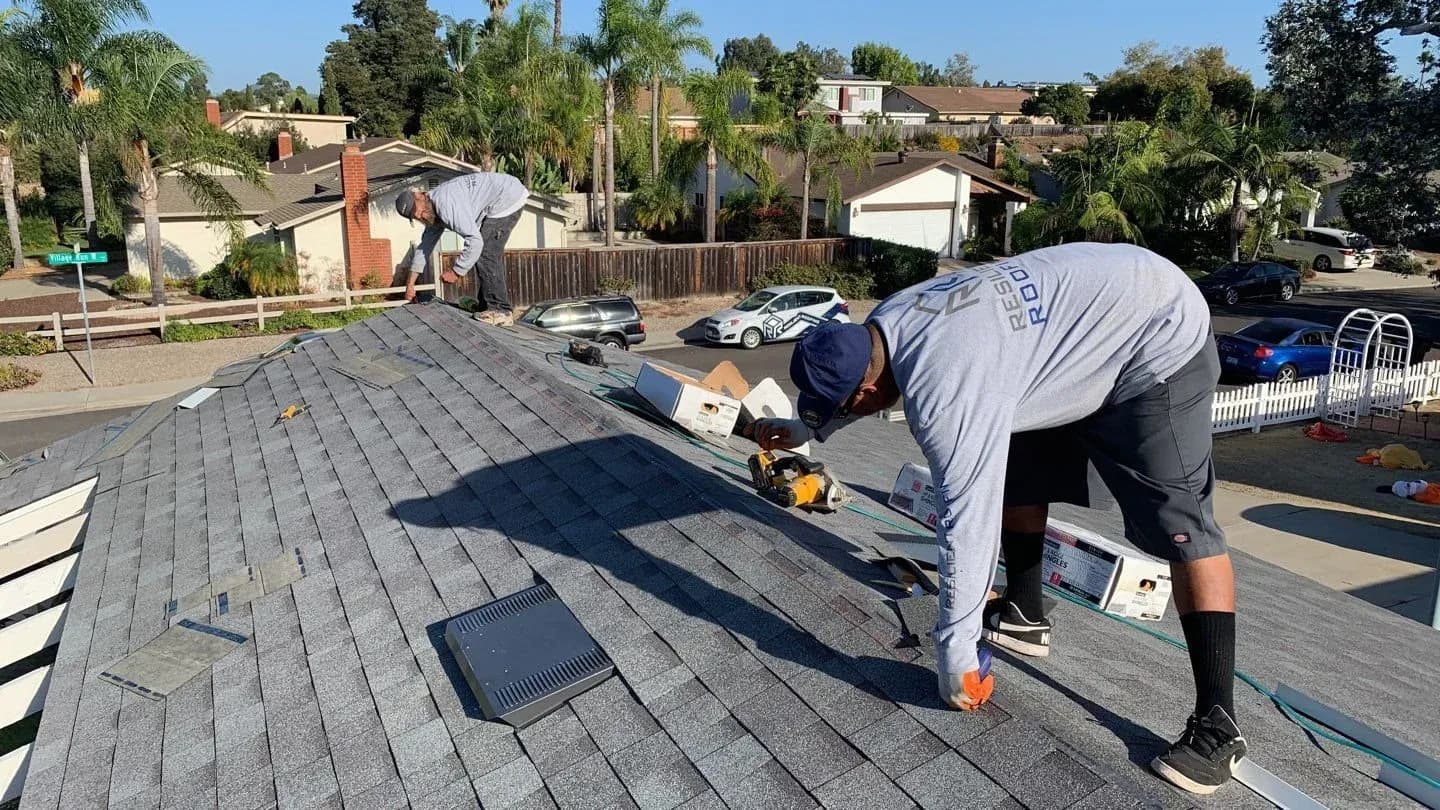
When the house feels stuffy on a warm San Diego afternoon, the instinct is to drop the thermostat a few degrees and let the A/C fight it out. But a lot of that heat is coming from above, and your air conditioner is working overtime to undo what the roof let in. Treat the roof as your first line of defense and you'll lean on the air conditioner far less.
Where the Heat Actually Comes From
On a sunny day, a roof can climb well past 140°F. That heat radiates down into the attic, warms the framing and insulation, and slowly bleeds into the rooms below. By late afternoon your upstairs feels several degrees warmer than the thermostat reading, and the A/C runs and runs trying to keep up. The roof is the gatekeeper — manage it well and the whole house cools more easily.
This matters even more for homes away from the coast. The marine layer keeps neighborhoods near the ocean naturally cooler, but inland communities bake under full sun with no afternoon relief. The further you are from that coastal breeze, the harder your roof and your air conditioner work — and the more you stand to gain from getting the roof right.
Ventilation Does the Heavy Lifting
The single most effective thing most homes can do is move hot air out of the attic. A balanced system pulls cooler air in low at the eaves and pushes hot air out high at the ridge, so heat doesn't sit and build.
- Intake vents at the soffits or eaves let fresh air enter
- Ridge or exhaust vents near the peak let hot air escape
- Together they create steady airflow without any electricity

Reflectivity and Insulation Round It Out
Two more pieces work alongside ventilation. A lighter, more reflective roof surface bounces sunlight away before it becomes attic heat, which matters most for inland homes outside the reach of the marine layer. And a good layer of attic insulation acts like a thermal blanket, slowing whatever heat does get through from reaching your ceilings. None of these is expensive on its own, and together they change how the whole house feels.
Small Steps, Real Comfort
You don't need a full reroof to feel a difference. Adding or correcting vents, topping up insulation, and clearing blocked soffits are modest improvements that pay off every summer. A surprising number of homes have intake vents that were painted over, stuffed with insulation, or never balanced against the exhaust vents up top — small problems that quietly choke the airflow the attic depends on.
If your roof is already aging, the smart play is to build these upgrades into your next replacement, when the deck is open and ventilation and reflectivity can be designed in from the start. Either way, the goal is the same: let the roof do its job so the air conditioner doesn't have to do all of it.
Want to cool your home without running the A/C nonstop? Schedule a free inspection or give us a call — we'll check your ventilation and insulation and point you to the upgrades that make the biggest difference.
Ready for a roof you can count on?
Call (619) 501-2138 or request your free, no-pressure consultation.