
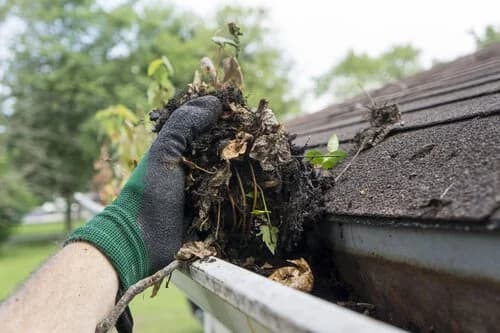
When spring rolls around, most of us think about scrubbing windows, airing out the house, and clearing out the garage. The roof rarely makes the list, but it should. After a winter of rain, wind, and falling debris, the top of your house has collected its own mess, and as the season turns it's also worth understanding how spring pollen and debris affect your roof. A little spring cleaning up there pays off all year long. Done right, it's straightforward and even satisfying; done carelessly, it can damage the roof or, worse, you. Here's how to do it well and safely.
Clear the Gutters First
Gutters are where winter debris piles up worst. Wet leaves, dirt, twigs, and grit settle into the troughs and harden into a sludge that blocks water flow. When that happens, the next rain backs up under the roof edge instead of draining away. Scoop the muck out by hand into a bucket, then flush the gutters and downspouts with a hose until water runs cleanly out the bottom. While you're at it, confirm the downspouts are carrying water well away from the foundation, and check that the gutters are still firmly attached and pitched correctly toward the outlets.
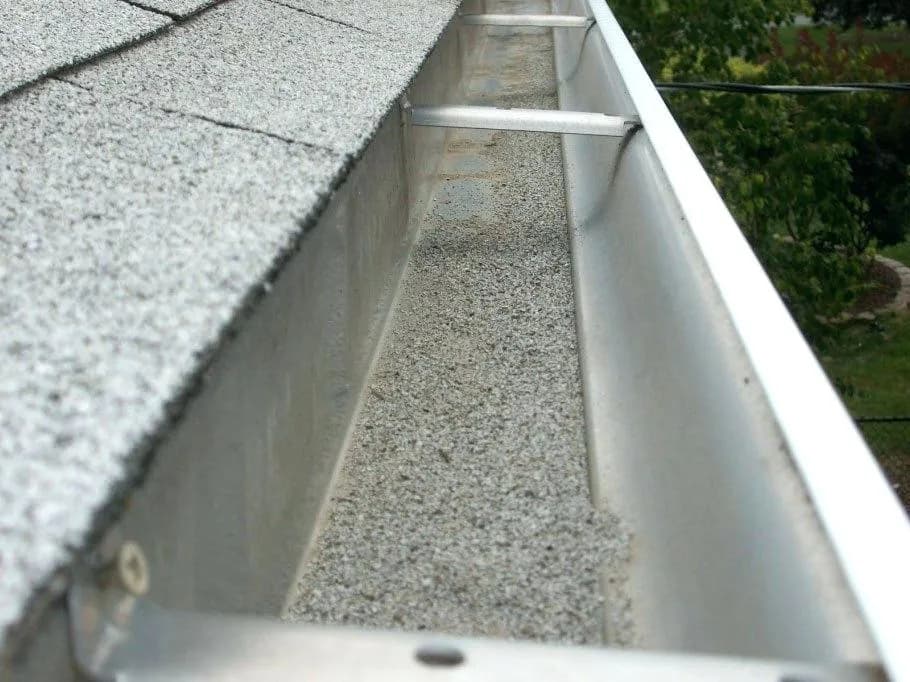
Watch for Granules
One thing to notice as you clean: how much gritty, sand-like material is in the gutter. Those are granules shed from asphalt shingles, the protective layer that shields them from our intense San Diego sun. A little is normal, especially on a newer roof that's still settling in. But a heavy load of granules, particularly from an older roof, can mean the shingles are wearing thin and starting to lose that protection. It's a useful early warning, and one you'd miss entirely if you never looked in the gutter.
Gently Clear the Roof Surface
Once the gutters are clear, turn to the roof itself. Brush or blow off the loose debris sitting in valleys and around penetrations, since anything that traps moisture invites moss, algae, and rot to settle in. Pay special attention to shaded north-facing slopes where dampness lingers. Whatever you do, skip the pressure washer. It's far too aggressive and can strip granules off shingles or force water up underneath shingles and tiles, creating leaks where there were none. A soft approach is all the roof needs, and on tile especially, mind your footing so you don't crack anything as you move around.
Know Your Limits
Roof work isn't worth a fall. If the roof is steep, slick, taller than a single story, or you simply aren't comfortable up there, this is an easy task to hand off. A pro can clean safely and, just as valuable, spot worn flashing, cracked tiles, thinning shingles, or split vent boots while they're up there. That turns a routine cleaning into a head start on any repairs, so small issues get caught and handled before the dry season turns into next winter's leaks. It's also worth timing this work for spring rather than waiting. Clearing the roof and gutters now, while the weather is mild, means everything is flowing freely before our long dry summer bakes any leftover debris into a stubborn, kindling-like crust that's far harder to remove and a genuine fire concern, which is why clearing debris before fire season peaks matters so much come Santa Ana season.
Request a roof and gutter cleaning or give us a call — we'll get everything clear, check the spots that are easy to miss, and let you know if anything up top needs attention this season.
Ready for a roof you can count on?
Call (619) 501-2138 or request your free, no-pressure consultation.