

Accessory dwelling units have taken off across San Diego, and for good reason. A granny flat can house family, bring in rental income, or simply add usable space to a property. But once the walls go up, you face a question that's easy to underestimate: what goes on top? The roof of your ADU does more than keep the rain out. It affects how the unit looks next to your main house, how comfortable it stays inside, and how well it weathers our particular mix of sun, salt, and sudden storms.
Match the Main House, or Make a Statement
Most homeowners want their ADU to feel like it belongs on the property rather than looking bolted on. The simplest path is matching the roofing material and color of your existing home, whether that's asphalt shingle, concrete tile, or a flat membrane. If you're torn between the two most common choices, our honest comparison of shingles and tile lays out the trade-offs. A close match keeps the property visually cohesive and often makes the permitting and design review smoother. You don't need a dramatic blue-domed showpiece like something off a postcard to make an ADU look intentional; consistency with the main house usually reads best.
That said, a detached unit at the back of a lot gives you room to play. If the ADU isn't highly visible from the street, a different but complementary material can be a smart way to manage budget without clashing. The same thinking applies to any covered outdoor area you add nearby, like a patio cover or roof deck that extends your living space.
Weigh the Common Materials
San Diego ADUs are typically topped with one of a few options:
- Asphalt shingles are affordable, widely available, and easy to match to an existing shingled home.
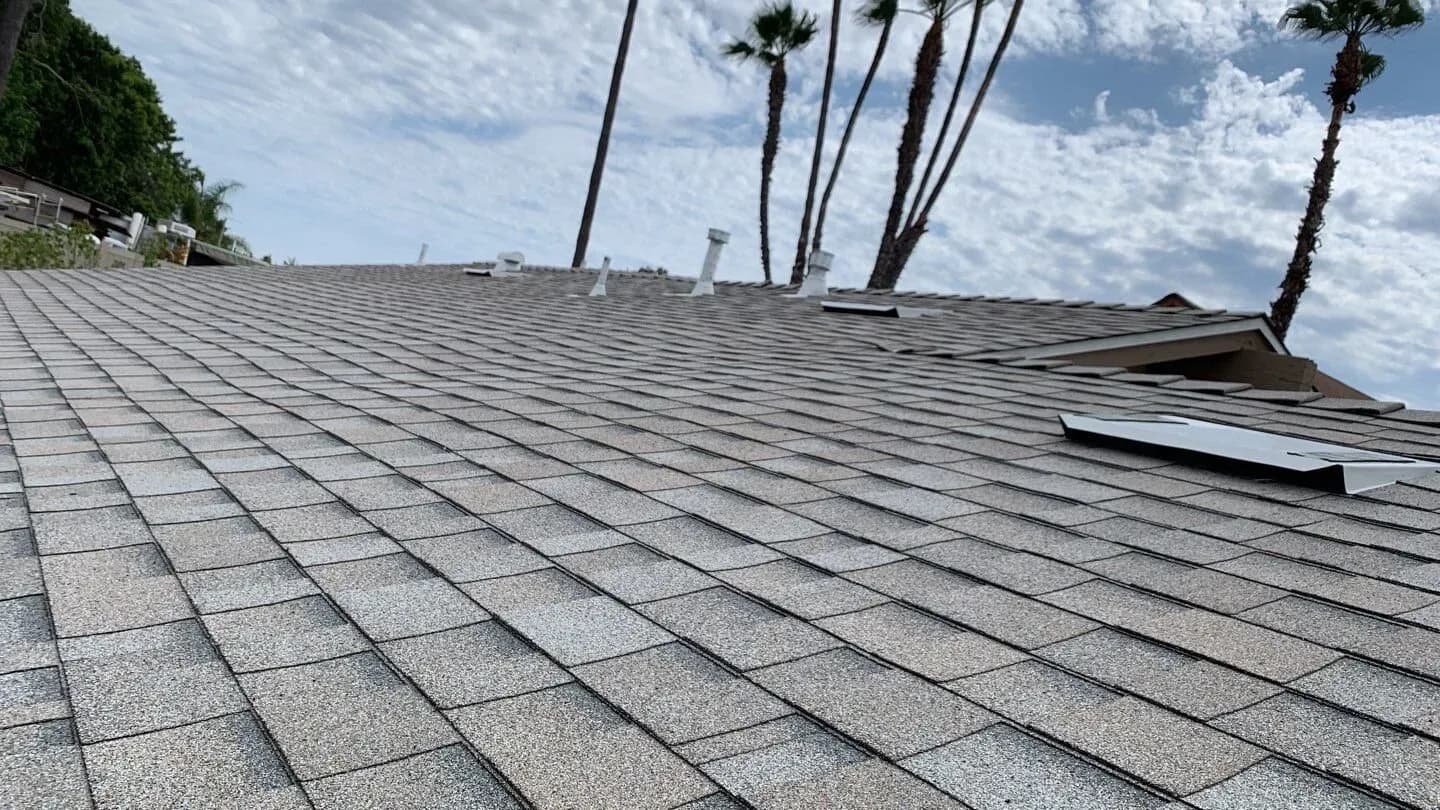
- Concrete or clay tile suits Spanish and Mediterranean styles and stands up well to sun, though it adds weight the structure must be designed for. On a smaller build, lightweight tile can ease that load.
- Flat or low-slope membranes like TPO work well for modern, boxy ADU designs and small footprints; it's worth understanding the built-up and single-ply options before deciding.
- Metal offers durability and a clean look, and reflective finishes that help with heat.
Each balances cost, appearance, and longevity differently, so the right pick depends on your design and budget.
Plan for the Climate
Because an ADU is small, the roof has an outsized effect on how it feels inside. A compact unit heats up fast on an inland summer afternoon, so reflective or light-colored materials paired with proper attic ventilation make a real comfort difference. Near the coast, salt air is hard on fasteners and certain metals, which is worth factoring into your material choice. And while heavy rain is rare here, a well-detailed roof with sound flashing keeps those occasional downpours out of a brand-new build.
Don't Overlook Code and Structure
ADUs must meet current building codes, and that includes the roof. Slope, ventilation, fire-rating, and the structure's ability to carry the weight of heavier materials like tile all come into play. It's far easier to sort these details during planning than to discover a problem after framing. Bringing a roofer into the conversation early helps you avoid surprises and choose a system that's both compliant and practical.
Thinking through the roof for an ADU or granny flat? We're happy to walk you through materials, costs, and what works best for your property. Get in touch here or give us a call at (619) 501-2138, and we'll help you start the project on solid footing.
Ready for a roof you can count on?
Call (619) 501-2138 or request your free, no-pressure consultation.