

More and more San Diego homeowners are opening a letter they never expected: a notice that their insurance won't be renewed because the home sits in a wildfire-risk area. It's stressful, and it can feel like there's nothing you can do about where your house is. But there is — and a surprising amount of it is on your roof. Your roof and its vents are among the few fire-risk factors you can actually change, and California's own rules require insurers to take that work into account.
Why insurers are pulling back
After years of catastrophic wildfire losses across the state, many carriers have stopped writing or renewing policies in higher-risk areas of California. In San Diego County, that pressure falls hardest on the Wildland-Urban Interface — the canyon-edge, foothill, and backcountry communities like Scripps Ranch, Rancho Bernardo, Alpine, Ramona, Julian, and Fallbrook, where homes meet open, fire-prone terrain.
When the standard market won't cover a home, owners often end up on the California FAIR Plan, the state's insurer of last resort. It typically costs more and covers less, so getting back to standard coverage — or avoiding the FAIR Plan in the first place — is worth real effort.
The rules are (partly) on your side
Here's the part that works in your favor. California's "Safer from Wildfires" regulation requires insurers to recognize specific wildfire-mitigation measures and reflect them in your pricing — and to give you your home's wildfire risk score along with a way to appeal it.
Two of the recognized measures are roofing work: a Class-A fire-rated roof and ember- and flame-resistant vents. Do the work, and the insurer is required to factor it in.
One honest caveat: no carrier is required to reinstate your specific policy or quote a particular discount — those decisions involve many factors and belong to the insurer. What hardening your home does is bring it up to the standards the rules reward, and give you documented proof to put in front of your agent.
The upgrades that move the needle
A few targeted improvements deliver most of the benefit:
- Ember-resistant vents. Attic, eave, and gable vents are the single most common way wind-blown embers get into a home. Replacing them with ember-resistant vents — we install Brandguard, Vulcan, and O'Hagin, all tested to the ASTM E2886 standard — is the highest-impact, lowest-cost step on the list.
- A Class-A roof. If your roof is aging or damaged, a roof replacement with a Class-A assembly hardens the largest surface of your home. (Here's why Class A matters in San Diego.)
- Hardened edges. Enclosing open eaves and adding ember-resistant gutters closes off the spots where embers like to collect.
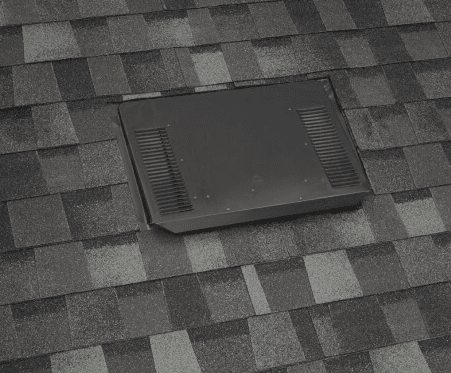
For the full breakdown of how each upgrade ties back to coverage, see our guide to roofing and vents for home insurance.
Document everything
This is the step homeowners miss. Whatever work you do, keep the paperwork — the products installed, their fire ratings, and the work performed. When we harden a roof, we give you that documentation specifically so you have something concrete to hand your agent or carrier as proof of mitigation.
Get ahead of it
Whether you've already been non-renewed or you'd simply rather not get that letter, the time to act is before fire season, not during it. We're a family-owned San Diego roofer, licensed and insured (CSLB #247618), and we've worked on the county's hillside and canyon homes since 1967. We'll tell you honestly which upgrades will actually help your situation — no scare tactics.
Want to know which roof and vent upgrades would help your home stay insurable? Request a free inspection or give us a call — we'll walk your roof and lay out your options.
Ready for a roof you can count on?
Call (619) 501-2138 or request your free, no-pressure consultation.