
If you live in one of San Diego County's many planned communities, replacing your roof comes with an extra layer most homeowners don't expect: your homeowners association. Beyond choosing a material and a contractor, you'll likely need approval before a single shingle comes off. Knowing the rules early keeps your project on schedule and spares you a violation notice after the work is done.
Know Who Owns the Roof
The first question to settle is whether the roof is even yours to replace. In single-family HOA neighborhoods, the homeowner usually owns and maintains the roof, with the association controlling only its appearance. In attached townhomes or condos, the association may own the roof entirely and handle replacement through its reserve fund.
Check your governing documents, the CC&Rs, to be certain before you spend a dime. If the HOA is responsible, your job may be simply reporting the problem and letting them manage it. If it's yours, the rest of this guide applies directly to you.
Start the Approval Process Early
Most associations require written approval through an architectural review committee before exterior changes. That means submitting an application that spells out the material, color, profile, and often the contractor you intend to use. Review can take weeks, so build that waiting period into your timeline rather than scrambling once a leak forces your hand.
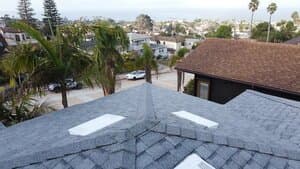
Submitting before fire season or the rainy stretch is wise, because that's when contractors get busiest and approval backlogs grow. Giving yourself a comfortable runway means you're not stuck with a failing roof while paperwork sits in a committee inbox.
Match the Community Standards
HOAs care intensely about visual consistency, so your replacement will usually need to match the established palette and style of the neighborhood. Many San Diego communities specify a particular tile profile or a narrow range of approved shingle colors to keep rooflines uniform from the street.
A few things commonly get scrutinized:
- The exact color and blend of the new material
- The profile, flat, low, or high, especially with tile
- Any rooftop additions like solar, vents, or skylights
- The condition and color of visible flashing and trim
A roofer who works regularly in HOA communities will know how to spec materials that satisfy these standards the first time, sparing you a rejected application and a costly redo.
Keep Documentation and Communicate
Once you're approved, hold onto everything: the approval letter, the material specifications, your permit, and the contractor's records. If a neighbor questions the work or a future board member raises an eyebrow, that paper trail proves you did things by the book. It also smooths your eventual sale, since buyers and their agents appreciate clean records.
It helps to give the association a heads-up before work begins, especially about dumpster placement, staging, and crew access in tight communities. A little courtesy prevents complaints and keeps the project moving.
Timing matters here too. In many San Diego communities, roofing crews are slammest just before the rainy season and during the dry stretch leading into fire season, so an approval and a project that start ahead of those crunch periods tend to go more smoothly. Coordinating with both your contractor and your association early means fewer surprises and a roof that's finished and signed off well before the weather turns.
Navigating an HOA roof replacement can feel like a second job. Contact our team or call us directly, and we'll help you spec a compliant roof, prepare your submission, and get the work done without the headaches.
Ready for a roof you can count on?
Call (619) 501-2138 or request your free, no-pressure consultation.